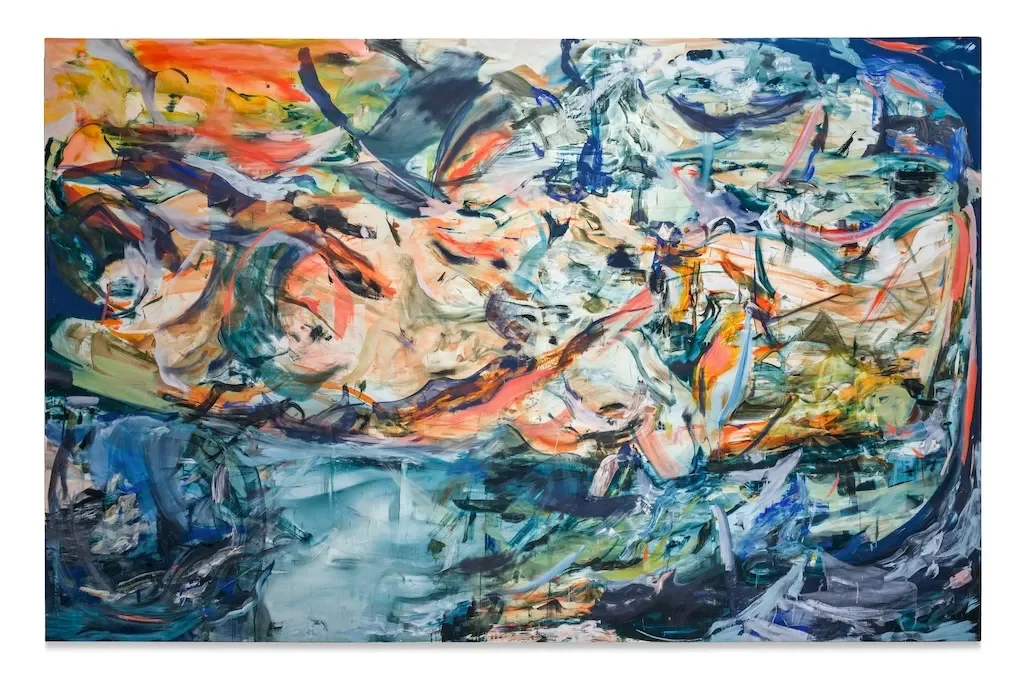
RM's SFMOMA Show Puts a Private Collection on the Museum Wall
A K-pop star's collection, arranged with SFMOMA curators, has drawn record advance sales and a fan audience. The exhibition also asks what happens when private taste takes on public authority.
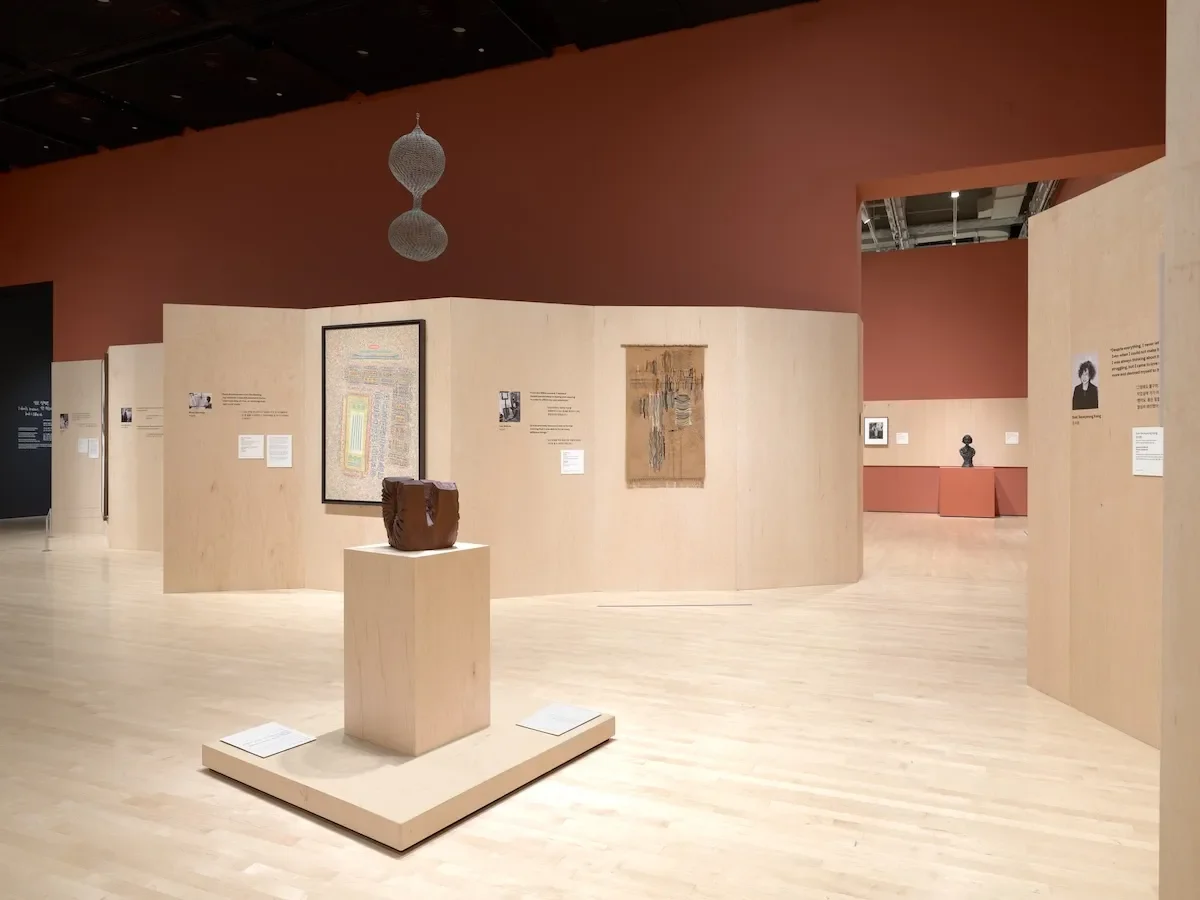
RM x SFMOMA: Between You and Me is not the exhibition most critics expected to review. Co-curated by the K-pop artist RM, born Kim Namjoon, with SFMOMA curators América Castillo and Hyoeun Kim, it arranges nearly 180 works from his collection and the museum's holdings across eight rooms organised around color, home, friends and people.
The commercial numbers are unusual for a museum show. Since opening in San Francisco last month, more than 66,000 tickets have sold, advance sales ran six times higher than for any previous SFMOMA exhibition, and merchandise sold out within hours. In Korea, the show has become a major cultural story. The art press, meanwhile, has given it little critical attention.
Blue as a First Thread
The first gallery, "Bluewater," opens with Kim Whanki's 1970 field of tiny blue dots, a painting donated to SFMOMA by the artist's widow. Around it blue keeps changing shape: Yves Klein's saturated pigment, Kim Tschang-yeul's water drops, Tony Feher's plastic bottles, Roni Horn's thick glass. Color is a loose thread, but it works on the eye.
A collector's taste is no substitute for art history, yet once it enters a museum, private taste gains public authority over which artists get seen.
Home, Friends and Self-Questioning
"Friendscape" hangs Ugo Rondinone's rough-hewn bronze fish above old Korean wooden geese on a water-patterned floor. Lee Daiwon's speckled Bugaksan Mountain (1976), RM's first acquisition, recalls the Pointillist paintings that had enchanted him. In "PhotoBuddha," visitors take selfies beside Nam June Paik's television-watching Buddha.
The show is at its best when RM turns his openness on himself. "Home" resembles a living room, where Chang Ucchin and Park Soo Keun keep domestic company with Giorgio Morandi. Then comes Son Sangki's Artificial City–Irony (1987), a lavish painted living room with a canvas on its wall. RM asks whether he is being a boring rich person, and says the discomfort is something he likes.
Biography and Its Risks
In "Passion," a spare Park Rehyun abstraction looks effortless but was not: she raised four children, helped her deaf husband, the painter Kim Kichang, communicate, and painted after everyone slept. Rhee Seundja, who left three sons in wartime Korea to paint in Paris, imagined each brushstroke as a spoonful of rice for her children. Biography risks flattening complex practices into inspirational stories, yet the reflections clearly moved visitors: the curators say some cried, and more than 700 post-visit comments were submitted to the museum's digital mural.
The exhibition begins in blue and ends in umber. In the final room, Yun Hyong-keun's dark vertical bands bleed into the canvas beside a Rothko, challenging the convenient "Korean Rothko" shorthand by hanging the two side by side.
Timing and the Korean Art Moment
The timing is striking. The show opened days after Ha Chong-Hyun's retrospective at the Asian Art Museum and the Samsung-backed "Korea" exhibition at the British Museum, and a week before Haegue Yang's Dia Beacon commission. Korean art's moment rests on decades of scholarship, institutional effort, and corporate and government backing. RM brings what none of that could guarantee: an audience ready to follow him.
BTS fans come first, and that should give museums pause. Star-driven exhibitions should not become a habit, and a collector's taste is no substitute for art history. Yet the usual objection, that fame eclipses the art, misses what works here: RM is not standing in front of the paintings so much as pointing at them.