Comparable Sales
Same-artist public sales ranked by medium, creation year, dimensions and sale recency.
No public-rights comparable sales meet the current evidence criteria. RELICT does not fill the table with research-only or licensed-only facts.
Observed sale facts, comparable evidence, artist index history and modeled research remain separate.
Same-artist public sales ranked by medium, creation year, dimensions and sale recency.
George Bickford [1901–1991] and Clara Louise Gehring Bickford [1903–1985], Cleveland, OH, given to t...
The Cleveland Museum of Art, Cleveland, OH
George Bickford [1901–1991] and Clara Louise Gehring Bickford [1903–1985], Cleveland, OH, given to the Cleveland Museum of Art The Cleveland Museum of Art, Cleveland, OH
Wooster College Exhibition. The College of Wooster Art Museum, Wooster, OH (organizer) (April 5-27, 1970). Art and Stories from Mughal India. The Cleveland Museum of Art, Cleveland, OH (organizer) (July 31-October 23, 2016). Carpets and Canopies in Mughal India (Indian art rotation). The Cleveland Museum of Art, Cleveland, OH (organizer) (March 22-September 8, 2024).
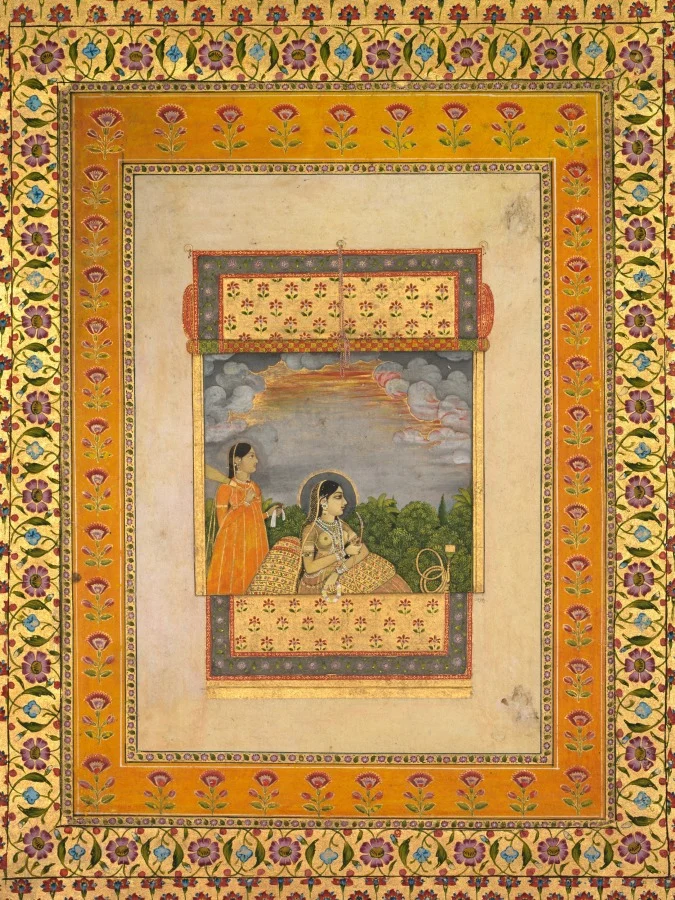
A golden window shade has been rolled up to reveal a princess seated on a terrace. The carpet draped over the sill echoes that of the balcony rail where royals would show themselves to the public. Rather than taking the view of an outsider, the viewer looks from inside the palace out to the women and the wooded landscape beyond. <br><br>During the mid-1600s, the Mughal court introduced a preference for the patterns on carpets and textiles: flowering plants on a plain ground. This influential fashion derived from their appreciation of European botanical studies that merchants and diplomats brought to India.
Observed sales: 0 · Comparable Sales: 0 · Provenance: 2 · Exhibitions: 3.