Ventes comparables
Ventes publiques du même artiste classées par technique, année de création, dimensions et date de vente.
Les ventes observées, preuves comparables, historiques d’indice et recherches modélisées restent distincts.
Ventes publiques du même artiste classées par technique, année de création, dimensions et date de vente.
Private Collection, Lower Rhine, Germany
(Paul Drey, Munich, Germany)
(A. S. Drey, New York, NY sold to the Cleveland Museum of Art)
The Cleveland Museum of Art, Cleveland, OH
Private Collection, Lower Rhine, Germany (Paul Drey, Munich, Germany) (A. S. Drey, New York, NY sold to the Cleveland Museum of Art) The Cleveland Museum of Art, Cleveland, OH
The Twentieth Anniversary Exhibition: The Official Art Exhibit of the Great Lakes Exposition. The Cleveland Museum of Art, Cleveland, OH (organizer) (June 26-October 4, 1936). The Silver Jubilee Exhibition. The Cleveland Museum of Art, Cleveland, OH (organizer) (June 23-September 28, 1941). Exhibition of the Month: Masterpieces in Miniature. The Cleveland Museum of Art, Cleveland, OH (organizer) (June 3-August 29, 1949). Dukes and Angels: Art from the Court of Burgundy (1364-1419). The Cleveland Museum of Art, Cleveland, OH (organizer) (October 24, 2004-January 9, 2005). Art Through the Ages, The Cleveland Museum of Art, Cleveland, OH (Oct. 30, 1931-Nov. 29, 1931).

Kan Tenju (Japanese, 1727–1795) · 1767

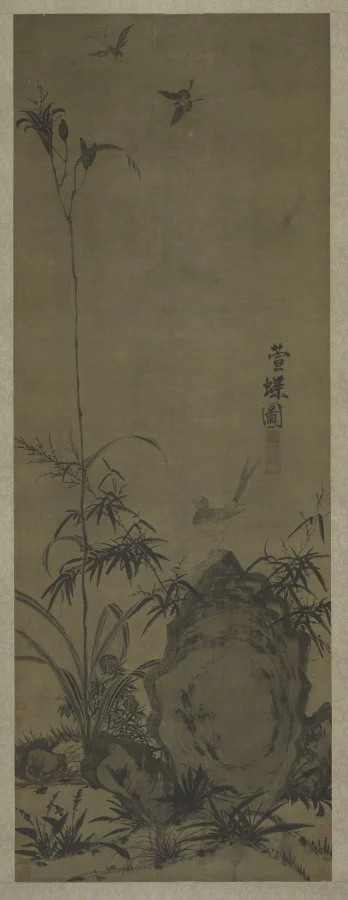
Liu Shanshou (Chinese, active 1300s) · 1300

Katsushika Ōi (Japanese, c. 1800-after 1857) · 1840

Artiste · 1800

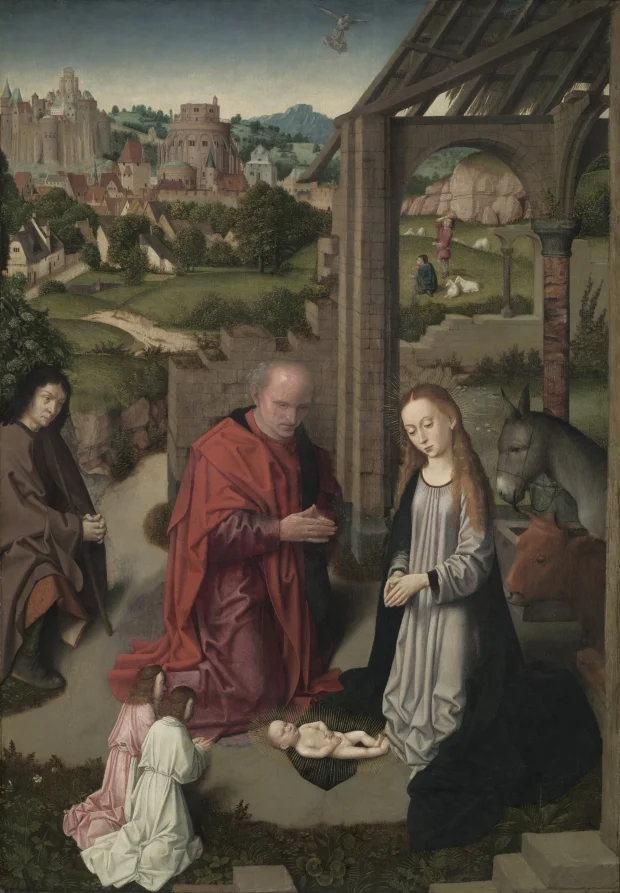
Gerard David (Netherlandish, 1450/60–1523) · 1485
This painting shows a Carthusian monk kneeling in devotion and prayer before the Crucifixion. It is likely that this panel was intended for the cell of a monk in an unknown monastery. The Carthusians were particularly devoted to the Passion and Crucifixion of Christ, and devotional images were provided for each monk’s cell. The Carthusian order was founded by Saint Bruno in 1084 with the purpose of providing the strictest separation from the world. The first Carthusians were dedicated to contemplation through silence, prayer, poverty, penance, and almost continuous occupancy of a solitary cell. The solitary life could only be maintained through the establishment of separate cell houses. Each community of monks was limited to the apostolic number of 12, though exceptions were sometimes made. They were recognized by their white, full-length, cowled habit called the scapular, shown here. The artist has not been identified.
Ventes observées: 0 · Ventes comparables: 0 · Provenance: 4 · Expositions: 4.