可比销售
同一艺术家的公开销售,按媒介、创作年份、尺寸和销售新近程度排序。
没有具有公开使用权的可比销售符合当前证据标准。RELICT 不会用仅供研究或仅限许可访问的数据填充表格。

实际销售事实、可比证据、艺术家指数历史与模型研究保持分开。
同一艺术家的公开销售,按媒介、创作年份、尺寸和销售新近程度排序。
H. Mitsui; C. Satomi.
(Howard Hollis and Co., Cleveland, OH, sold to the Cleveland Museum of Art)
The Cleveland Museum of Art, Cleveland, OH, 1959-present
H. Mitsui; C. Satomi. (Howard Hollis and Co., Cleveland, OH, sold to the Cleveland Museum of Art) The Cleveland Museum of Art, Cleveland, OH, 1959-present
Japanese Decorative Style. The Cleveland Museum of Art (August 30-October 15, 1961); The Art Institute of Chicago, Chicago, IL (November 9-December 17, 1961). Juxtapositions. The Cleveland Museum of Art, Cleveland, OH (September 11-October 10, 1965). Japanese Screens from the Museum and Cleveland Collections. The Cleveland Museum of Art, Cleveland, OH (organizer) (March 23-May 8, 1977). Byobu: The Art of the Japanese Screen. The Cleveland Museum of Art (organizer) (August 1-October 14, 1984). Japanese Ink Painting. Tokyo National Museum, Tokyo, Japan (organizer) (October 13-November 23, 1987). Screen Paintings of the Muromachi Period. Tokyo National Museum, Tokyo, Japan (March 28-May 7, 1989). Asian Autumn: Masterpieces from the Collection. The Cleveland Museum of Art, Cleveland, OH (organizer) (September 17, 1991-January 5, 1992). Highlights of Asian Paintings from The Cleveland Museum of Art. Nara National Museum (organizer) (February 21-March 29, 1998); Suntory Museum of Art (April 28-June 21, 1998). Streams and Mountains Without End: Asian Art and the Legacy of Sherman E. Lee at the Cleveland Museum of Art. The Cleveland Museum of Art, Cleveland, OH (organizer) (June 27-August 23, 2009). Admired from Afar: Masterworks of Japanese Painting from the Cleveland Museum of Art. Tokyo National Museum, Tokyo, Japan (January 15-February 23, 2014); Kyushu National Museum, Fukuoka, Japan (July 8-August 31, 2014). Japanese Ink Paintings from American Collections: The Muromachi period: An exhibition in honor of Shūjirō Shimada. The Art Museum, Princeton University, Princeton, NJ (April 25–June 13, 1976).

艺术家 · 1800

Master of the court of Mandi (Indian) · 1715
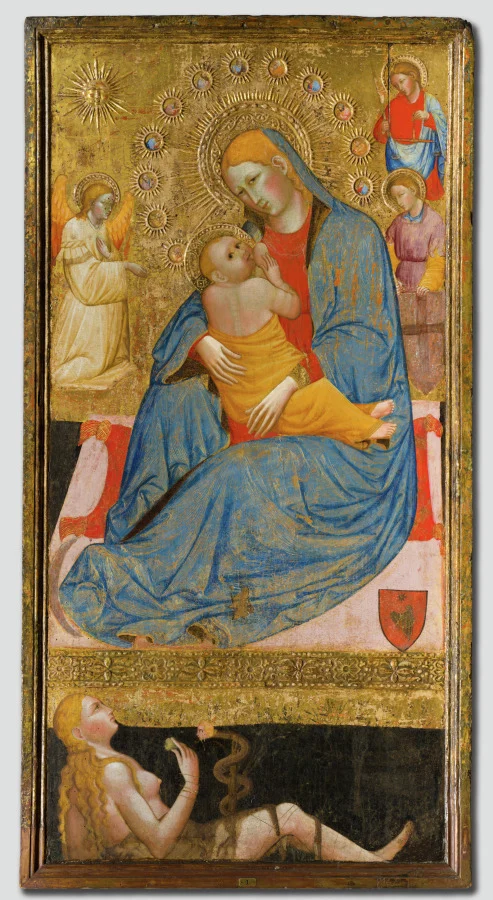
Olivuccio di Ciccarello (Italian, Marche, 1360/65–1439) · 1395

Xie Shichen (Chinese, 1487–after 1567) · 1542
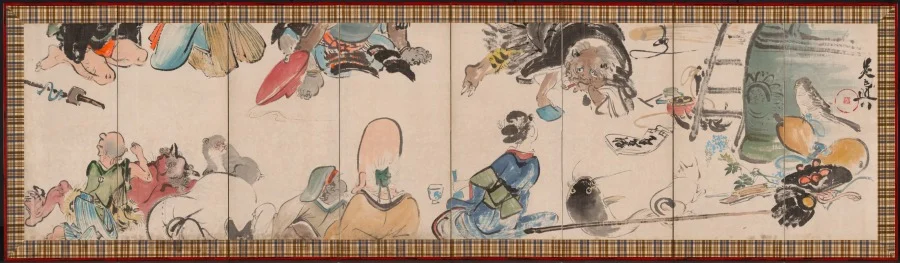
Shibata Zeshin (Japanese, 1807–1891) · 1850
A tiger sits in a bamboo grove whipped with fierce wind, while a dragon claws through clouds above rough waves. Tiger and dragon are Chinese cosmological symbols of the balancing forces in the world, yin (the feminine aspect) and yang (the masculine aspect). The tiger's roar is also said to generate wind, and the dragon clouds. The screens may have originally been meant to express the fluctuating nature of the world as envisioned in the practice of military divination, or forecasting, based on the <em>Yijing</em> (<em>Book of Changes</em>).
观察到的销售: 0 · 可比销售: 0 · 来源与流传记录: 3 · 展览: 10.