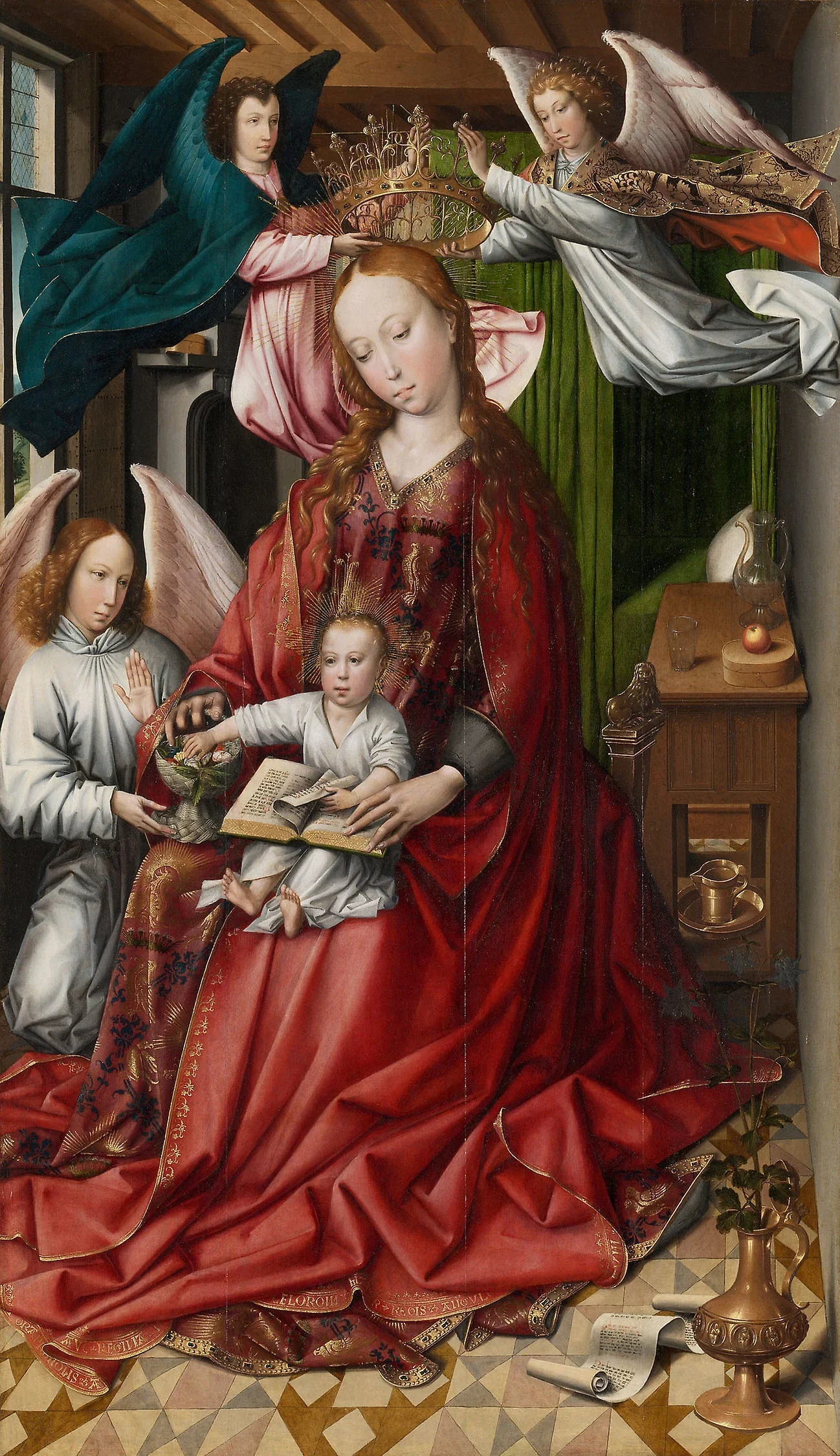
Virgin and Child Crowned by Angels
Art Institute of Chicago
Museum

Virgin and Child Crowned by Angels

c. 1490
Colijn de Coter (Netherlandish, c. 1450– by 1540) visual detail
ХудожникColijn de Coter (Netherlandish, c. 1450– by 1540)
Перейти к художнику →

Рыночная аналитика

Факты наблюдаемых продаж, сопоставимые доказательства, история индекса художника и модельные исследования остаются отдельными категориями.

Публичные доказательства
Последняя известная цена $15,000 Dealer sale · Oct 1, 1912
+628.9% vs previous observed sale
Сопоставленная история цен · нормализованные USD · предварительные данные Foundry
1912 · $2,0581912 · $15,000
$2K1912
$15K1912
Последняя известная цена$15,0002 matched observed sales
Наблюдаемая медиана$8,529
Наблюдаемые продажи2
Индекс художника—
1912-10-01Dealer sale$15,000.00
1912-04-30Dealer purchase$2,058.00
Индекс художника недоступенНедостаточно допустимых доказательств; искусственный график не публикуется.Сведения о художнике не являются оценкой стоимости произведения.

Сопоставимые продажи

Публичные продажи этого же художника, ранжированные по технике, году создания, размерам и давности продажи.

Ранжирование по доказательствам
Нет сопоставимых продаж с правом публичного использования, отвечающих текущим требованиям к доказательствам. RELICT не заполняет таблицу фактами только для исследований или только для лицензионного доступа.

Происхождение

Публичное
Probably Don Luis Portilla, Madrid, by 1880

Probably Don Luis Portilla, Madrid, by 1880

sold, Madrid, 1880, no. 89 [first suggested by Campbell 1981

sold, Madrid, 1880, no. 89 [first suggested by Campbell 1981

then attributed to Rogier van der Weyden, is described as “La Vírgen y el Niño

then attributed to Rogier van der Weyden, is described as “La Vírgen y el Niño

dos Angeles la coronan y otro presenta al Niño un canastillo de flores” (the Virgin and Child

dos Angeles la coronan y otro presenta al Niño un canastillo de flores” (the Virgin and Child

two angels crown her and another presents a basket of flowers to the Child)]. J. G. Arthur, London [according to Colnaghi stock card]

two angels crown her and another presents a basket of flowers to the Child)]. J. G. Arthur, London [...

sold to Colnaghi, London, Dec. 1906, with a half-share owned by Knoedler, Paris and New York [Colnaghi stock card]

sold to Colnaghi, London, Dec. 1906, with a half-share owned by Knoedler, Paris and New York [Colnag...

sold by Knoedler, New York, to Ryerson, for $15,000, Oct. 31, 1912 [bill of sale, Art Institute Archives]

sold by Knoedler, New York, to Ryerson, for $15,000, Oct. 31, 1912 [bill of sale, Art Institute Arch...

Исходный текст о провенансе

Probably Don Luis Portilla, Madrid, by 1880; sold, Madrid, 1880, no. 89 [first suggested by Campbell 1981; then attributed to Rogier van der Weyden, is described as “La Vírgen y el Niño; dos Angeles la coronan y otro presenta al Niño un canastillo de flores” (the Virgin and Child; two angels crown her and another presents a basket of flowers to the Child)]. J. G. Arthur, London [according to Colnaghi stock card]; sold to Colnaghi, London, Dec. 1906, with a half-share owned by Knoedler, Paris and New York [Colnaghi stock card]; sold by Knoedler, New York, to Ryerson, for $15,000, Oct. 31, 1912 [bill of sale, Art Institute Archives]; Martin A. Ryerson (d. 1932), Chicago; on loan to the Art Institute from 1913; bequeathed to the Art Institute, 1933.

Art Institute of ChicagoДостоверность 100%

Выставки

Публичное
Исходный текст о выставках

New York, Kleinberger, Loan Exhibition of Flemish Primitives, 1929, no. 33. Art Institute of Chicago, A Century of Progress, 1933, no. 37. Art Institute of Chicago, A Century of Progress, 1934, no. 118.

Art Institute of ChicagoДостоверность 100%

Обзор по источникам Подтверждающие материалы

<p>The gold text on the bottom edge of the Virgin Mary’s red mantle translates as “Hail, Queen of the heavens, Mother of the king of angels.” These lines, from a hymn called a Marian antiphon, were famously set to music as a choral composition in the 15th century. This kind of polyphonic music, requiring multiple trained voices employed at great expense, was associated with the extravagant culture of the Brussels court. Its evocation here, like the bejeweled crown lowered onto Mary’s head, serves to honor the Virgin and to inspire aural worship.</p>

Art Institute of ChicagoДостоверность 100%

Статус доказательств

Наблюдаемые продажи: 2 · Сопоставимые продажи: 0 · Происхождение: 10 · Выставки: 3.

Short DescriptionProvenance TextExhibition HistoryCredit Line