Назад
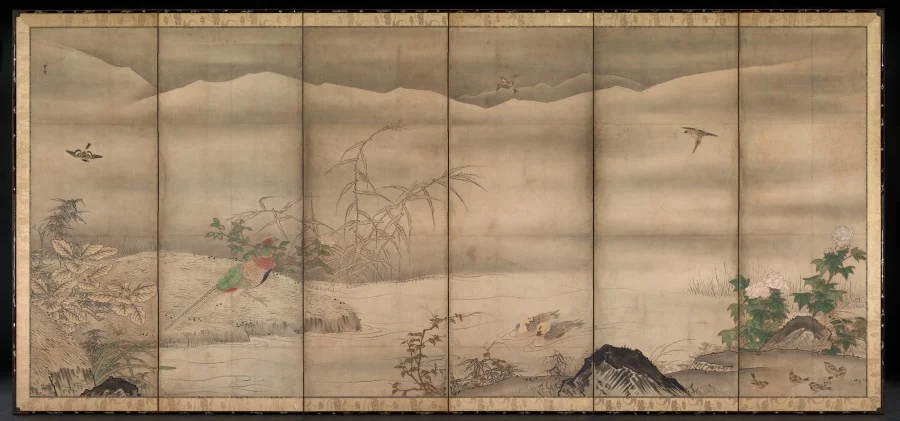
Birds and Flowers in a Landscape of the Four Seasons
The Cleveland Museum of Art · Purchase from the J. H. Wade Fund
Museum

Birds and Flowers in a Landscape of the Four Seasons

1550–99
Sesshū Tōyō (Japanese, 1420–1506) visual detail
ХудожникSesshū Tōyō (Japanese, 1420–1506)
Перейти к художнику →

Рыночная аналитика

Факты наблюдаемых продаж, сопоставимые доказательства, история индекса художника и модельные исследования остаются отдельными категориями.

Публичные доказательства
Последняя известная цена—0 matched observed sales
Наблюдаемая медиана—
Наблюдаемые продажи0
Индекс художника—
К работе не привязана нормализованная наблюдаемая продажа с разрешёнными правами использования. Искусственная история цен не показывается.
Индекс художника недоступенЗавершённого публичного расчёта индекса художника нет.Сведения о художнике не являются оценкой стоимости произведения.

Сопоставимые продажи

Публичные продажи этого же художника, ранжированные по технике, году создания, размерам и давности продажи.

Ранжирование по доказательствам
Нет сопоставимых продаж с правом публичного использования, отвечающих текущим требованиям к доказательствам. RELICT не заполняет таблицу фактами только для исследований или только для лицензионного доступа.

Происхождение

Публичное
Происхождение

D. Konoike, Osaka, Japan

?–1961

(Howard Hollis and Co., Cleveland, OH, sold to the Cleveland Museum of Art)

1961–

The Cleveland Museum of Art, Cleveland, OH

Исходный текст о провенансе

D. Konoike, Osaka, Japan (Howard Hollis and Co., Cleveland, OH, sold to the Cleveland Museum of Art) The Cleveland Museum of Art, Cleveland, OH

The Cleveland Museum of ArtДостоверность 100%

Выставки

Публичное
Исходный текст о выставках

Year in Review (1961). The Cleveland Museum of Art, Cleveland, OH (organizer) (November 1-26, 1961). Byobu: The Art of the Japanese Screen. The Cleveland Museum of Art, Cleveland, OH (organizer) (December 8, 1987-January 10, 1988). Main Asian Rotation (G121). The Cleveland Museum of Art, Cleveland, OH (October 26, 2003-March 12, 2004). Main Asian Rotation (Gallery 236). The Cleveland Museum of Art, Cleveland, OH (December 24, 2013-July 21, 2014).

The Cleveland Museum of ArtДостоверность 100%

Обзор по источникам Подтверждающие материалы

The monk-painter Sesshū is revered today, as he was in his own time. While he left Kyoto's sophisticated intellectual and cultural environment to live in a provincial village in a far western province, he seems never to have severed contacts with the monastic communities of his young adulthood. His residence in Yamaguchi proved fortuitous because his patron, the region's military lord, enjoyed considerable freedom in conducting trade missions overseas with Korea and China. Sesshū went to China in 1467 and traveled about the country, visiting well-known historical sites and Chan (Zen) temples before returning two years later. Thus he became familiar with contemporary painting practices, materials, formats, and subject matter. His assimilation and then transmission of these elements had a profound impact on the following generations of ink painters, patrons, and Zen communities throughout Japan. <br><br>Despite the presence on these byōbu of the name "Sesshū," they are from the hand of another accomplished but as yet anonymous follower active in the middle of the sixteenth century. Sesshū's name here, as on a handful of similar bird-and-flower byōbu, attests to the master's identification at that time with the colorful mural paintings on the same theme emanating from Ming dynasty China. This genre had heretofore been relegated to hanging scroll compositions, so the intro-duction into temple and daimyo residences of such an attractive theme surely caused considerable excitement in the later fifteenth century, when in all likelihood Sesshū introduced it into the Japanese painting repertoire. Subsequently, artists of varying backgrounds and training tried their hands at these large, dramatic scenes. <br><br>From right to left the composition portrays an array of flowering plants in the near distance that indicate the passage of the seasons. Birds, usually paired, occupy this setting, engaged in various activities that lend naturalism and an air of peacefulness. The world they inhabit may be characterized pictorially by expansive middle-ground waterscapes that end where the far distant mountains rise as backdrops. These features appear consistently in other bird-and-flower byōbu attributed to Sesshū. Also noteworthy is the absence of any birds of prey such as the samurai's beloved hawks, emblems of fierceness and graceful strength that appear often in the byōbu of sixteenth-century Kano and Soga school painters.

The Cleveland Museum of ArtДостоверность 100%

Статус доказательств

Наблюдаемые продажи: 0 · Сопоставимые продажи: 0 · Происхождение: 3 · Выставки: 2.

Place Of OriginShort DescriptionProvenance TextExhibition HistoryCredit Line