Venice Biennale's National Pavilions: Critics' Picks and Snubs
Hyperallergic editors share their favorite national pavilions at the 2026 Venice Biennale, amid heatwaves and controversy. A critical look at what works and what doesn't.
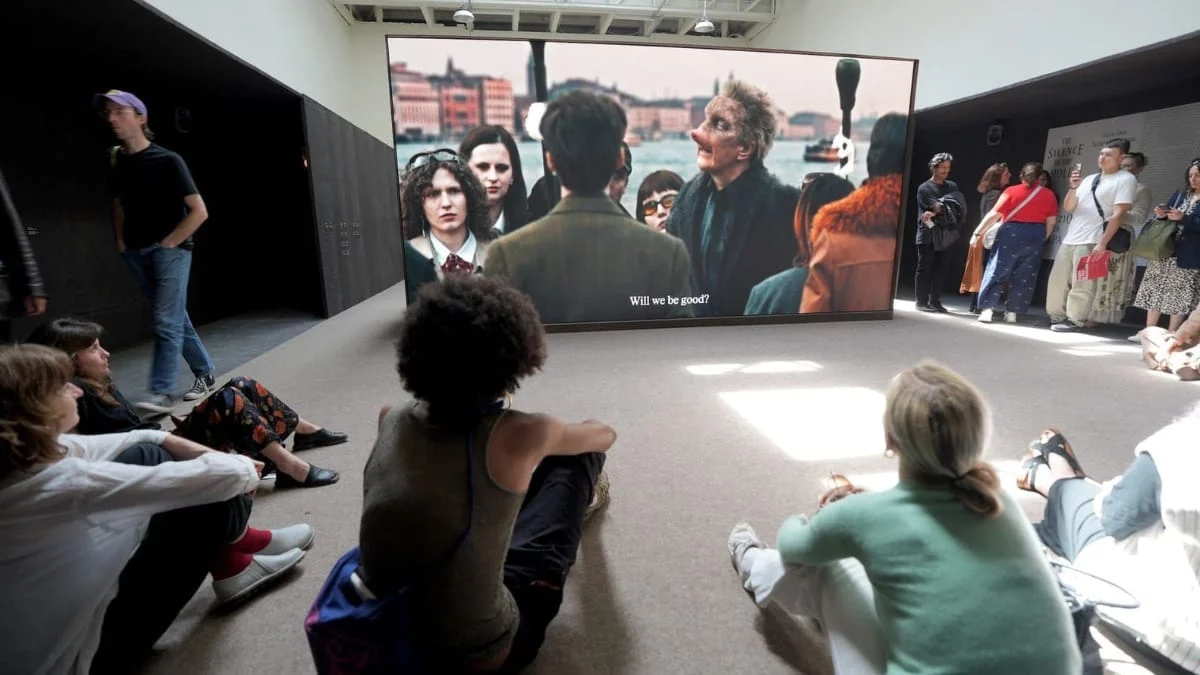
The 2026 Venice Biennale, running through November 22, made headlines for its posthumous main exhibition by Koyo Kouoh and a historic pro-Palestine strike. Now that the initial fanfare has subsided, Hyperallergic's Editor-at-Large Hrag Vartanian and critic Aruna D'Souza have turned their attention to the national pavilions, offering a critical assessment of which ones merit a visit and which are best avoided.
Their conversation kicks off with a provocative defense of national pavilions, a format often criticized for reinforcing outdated notions of nationhood. Vartanian and D'Souza argue that these spaces can still foster meaningful artistic expression, even as they navigate geopolitical tensions and institutional pressures. The discussion is part of a multi-part series that will ultimately cover the good, the bad, and the in-between.
Among the noteworthy pavilions, the editors highlight the controversy surrounding Gabrielle Goliath's Elegy, which was cancelled by the South African pavilion and later displayed at a church. They also discuss Khaled Sabsabi's Australian pavilion, which was censored under pressure from pro-Israel groups before being reinstated—a saga that underscores the intersection of art and politics at the Biennale.
Other standout projects include Dayanita Singh's installation at the State Archives of Venice and a collaboration between Arthur Jafa and Richard Prince that the editors describe as "hit-and-miss." The coverage also touches on the US pavilion, featuring a work by Alma Allen that was deemed unmemorable, and the main exhibition's posthumous tribute to its curator.
While the editors express mixed feelings about some pavilions, their insights provide a practical guide for visitors navigating the sprawling exhibition. They note that the summer's punishing heat waves have tapered off, making this an opportune time to explore the Biennale before it closes.
Beyond pavilions, the newsletter offers additional content: staff writer Anna Lee curates six artworks inspired by Homer's Odyssey, including a notable piece by Romare Bearden that reinterprets the epic through African-American life. Senior Editor Valentina Di Liscia's Art Movements column covers the Wolf Kahn Foundation's new New York space and a new MoMA PS1 café, while an interview with Bengali-American artist Rina Banerjee sheds light on her Dumbo studio practice.
For collectors and art professionals, the Biennale remains a key barometer of global artistic trends and institutional priorities, even as it wrestles with political controversies and environmental challenges—this year, record heatwaves have even damaged Monet's gardens in Giverny. As the art world's attention pivots to Venice, the discerning eyes of critics like Vartanian and D'Souza offer invaluable direction, ensuring that time spent among the pavilions is both rewarding and intellectually stimulating.