可比销售
同一艺术家的公开销售,按媒介、创作年份、尺寸和销售新近程度排序。
没有具有公开使用权的可比销售符合当前证据标准。RELICT 不会用仅供研究或仅限许可访问的数据填充表格。

实际销售事实、可比证据、艺术家指数历史与模型研究保持分开。
同一艺术家的公开销售,按媒介、创作年份、尺寸和销售新近程度排序。
Collection in Pusan, Korea, to Gordon K. Mott
Gordon K. Mott [1914-1998], Lakewood, OH, bequest to the Cleveland Museum of Art
The Cleveland Museum of Art, Cleveland, OH
Collection in Pusan, Korea, to Gordon K. Mott Gordon K. Mott [1914-1998], Lakewood, OH, bequest to the Cleveland Museum of Art The Cleveland Museum of Art, Cleveland, OH
The Lure of Painted Poetry: Japanese and Korean Art. The Cleveland Museum of Art, Cleveland, OH (organizer) (April 15-August 21, 2011). Old and New in Korean Art. The Cleveland Museum of Art, Cleveland, OH (organizer) (October 28, 2022-April 23, 2023).
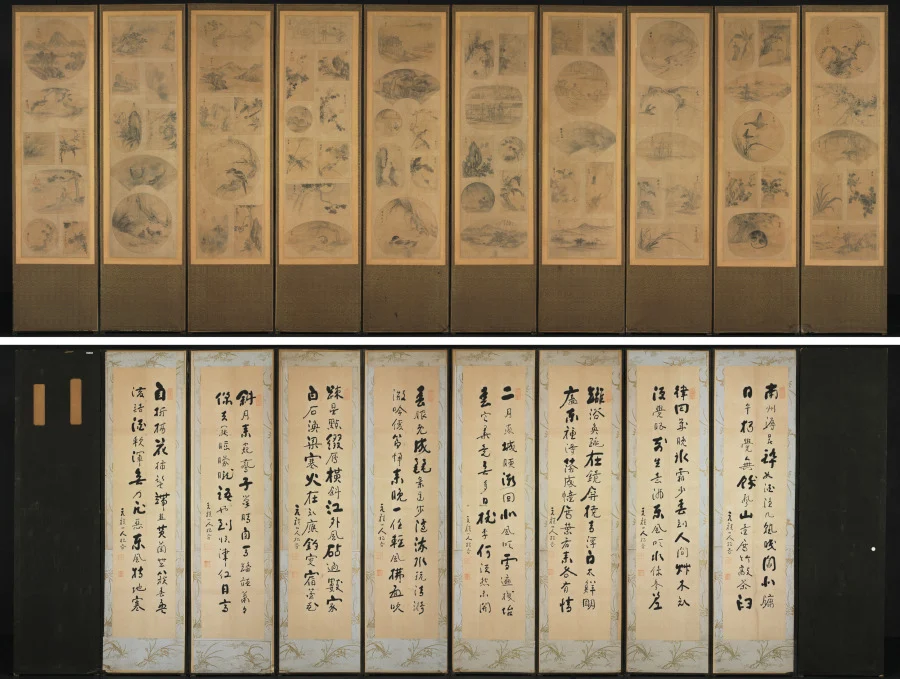
The front of this screen features an assortment of subjects: birds and flowers, landscapes, and scenes of everyday life, mostly in monochromatic ink with light colors. The screen’s reverse side conveys a number of classical poems about the fleeting beauty of the four seasons. Traditionally, only one side of a folding screen bears painted or embroidered images, since these were used as a background furnishing. In Korean houses by the 1800s and early 1900s, however, two-sided folding screens became noticeably popular, possibly inspired by Japanese double-sided folding screens, which mainly served as room dividers in Japanese households.
观察到的销售: 0 · 可比销售: 0 · 来源与流传记录: 3 · 展览: 2.