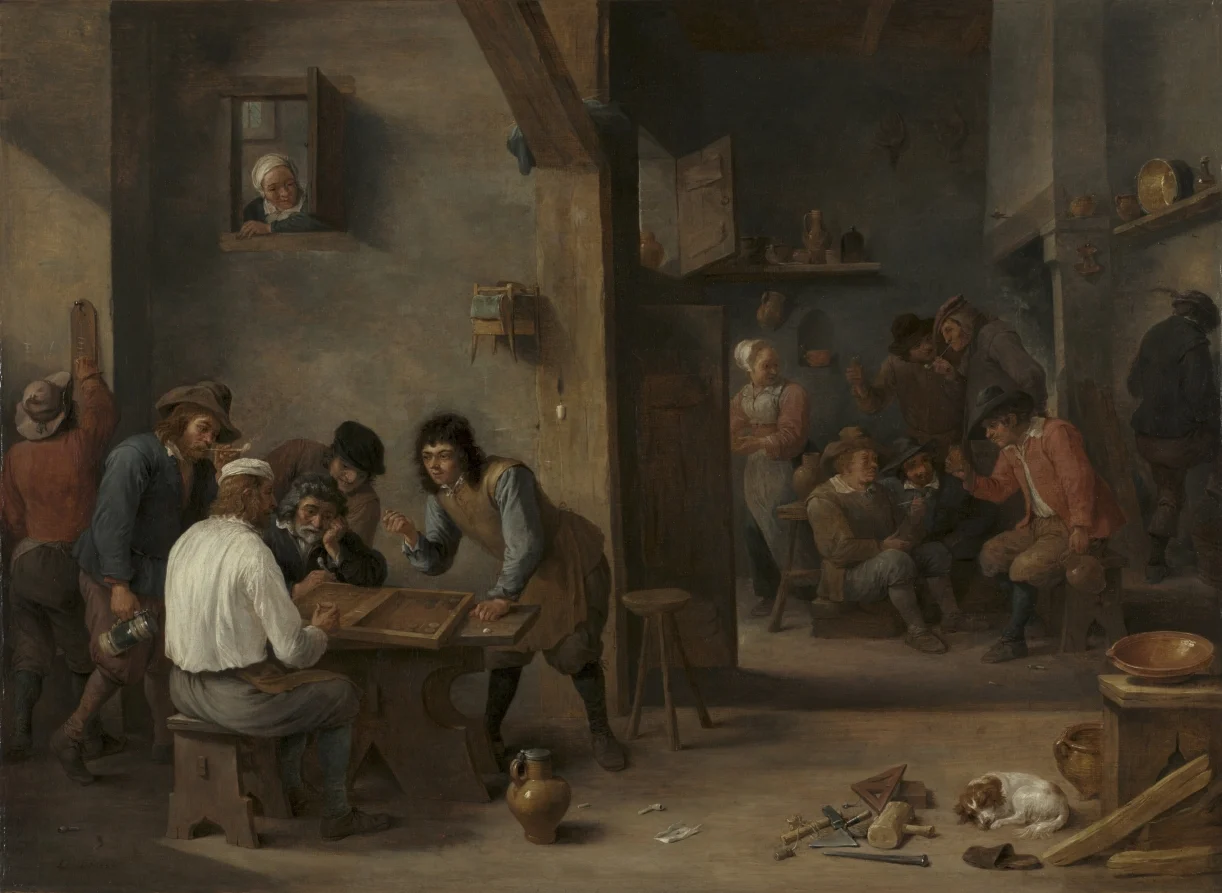
Game of Backgammon
The Cleveland Museum of Art · Gift of Mr. and Mrs. Samuel D. Wise
Museum

Game of Backgammon

1640s
David Teniers (Flemish, 1610–1690) visual detail
ХудожникDavid Teniers (Flemish, 1610–1690)
Перейти до художника →

Ринкова аналітика

Факти спостережуваних продажів, порівнювані докази, історія індексу художника й модельні дослідження залишаються окремими категоріями.

Публічні докази
Остання відома ціна—0 matched observed sales
Спостережувана медіана—
Спостережувані продажі0
Індекс художника—
До роботи не прив’язано нормалізований спостережуваний продаж із дозволеними правами використання. Штучна історія цін не показується.
Індекс художника недоступнийЗавершеного публічного розрахунку індексу художника немає.Відомості про художника не є оцінкою вартості твору.

Зіставні продажі

Публічні продажі цього самого художника, ранжовані за технікою, роком створення, розмірами й давністю продажу.

Ранжування за доказами
Немає порівнюваних продажів із правом публічного використання, що відповідають поточним вимогам до доказів. RELICT не заповнює таблицю фактами лише для досліджень або лише для ліцензійного доступу.

Походження

Публічне
1674-1723

Philippe II, Duke of Orléans (1674–1723), Regent of France

1723-1752

Louis I Duke of Orléans (1703–1752)

1752-1785

Louis Philippe I (1725–1785), Duke of Orléans

1785-1792

Louis-Philippe II (1747–1793), Duke of Orléans / Philippe Égalité

1792-1793

Brought to London by Thomas Moore Slade, (exhibited for sale in the Royal Academy, London, April 179...

Походження

George Hibbert (1757–1837), London, England

-1816

Thomas Penrice (d. 1816), Great Yarmouth, England, by inheritance to John Penrice

Вихідний текст про провенанс

Philippe II, Duke of Orléans (1674–1723), Regent of France Louis I Duke of Orléans (1703–1752) Louis Philippe I (1725–1785), Duke of Orléans Louis-Philippe II (1747–1793), Duke of Orléans / Philippe Égalité Brought to London by Thomas Moore Slade, (exhibited for sale in the Royal Academy, London, April 1793) George Hibbert (1757–1837), London, England Thomas Penrice (d. 1816), Great Yarmouth, England, by inheritance to John Penrice John Penrice Sr. (1787-1844), sold, Christie's (Sale: Christie's, London, England, 07/06/1844, to Farrer) Farrer Private collection, sold, Christie's, London (Sale: Christie's, London, England, 07/17/1925, no. 119 through S. A. Hecht, London, England to Mr. and Mrs. Samuel Wise) Mr. and Mrs. Samuel D. Wise (Cleveland, Ohio), by gift to the Cleveland Museum of Art, 1943 The Cleveland Museum of Art, Cleveland, OH

The Cleveland Museum of ArtДостовірність 100%
Виставки

Публічне
Вихідний текст про виставки

Art: The International Language. The Cleveland Museum of Art (October 2-November 4, 1956). Images of History. Denver Art Museum, Denver, CO (organizer) (March 14-May 21, 1961). Re-presenting the Baroque. Samuel P. Harn Museum of Art (organizer) (October 1, 1997-April 1, 1998). Images of History, Denver Art Museum, CO (03/14/1961- 05/21/1961). Royal Academy, London, England (April 1793).

The Cleveland Museum of ArtДостовірність 100%

Огляд за джерелами Підтвердні матеріали

The game of backgammon has a long and popular history which can be traced back many centuries. The version of the game as it is played in modern times first appeared in the 1400s under various names. Its current appellation was coined around the same time as the date of this painting. Backgammon was exceptionally popular in the 1600s, and was often played for money or other wagers. The two men on the left side of this painting are clearly involved in a high stakes game of backgammon. A three-man cluster has gathered to watch them lay their bets, while another tallies their points on a scoreboard. The young lady in the right corner of the room otherwise surrounded by men and the older women who looks down on the game of backgammon from a window, both indicate that the interior presented in this painting is probably the gaming room of a brothel. Courtesans often worked out of such game rooms, providing further entertainment for men. Depictions of games, like procurement scenes, often symbolized moralizing virtues. Games were considered at best folly and at worst immoral. Backgammon was often used to represent the foolishness or wickedness of betting and wasting one's time.

The Cleveland Museum of ArtДостовірність 100%

Статус доказів

Спостережувані продажі: 0 · Зіставні продажі: 0 · Походження: 14 · Виставки: 3.

Place Of OriginShort DescriptionProvenance TextExhibition HistoryCredit Line