比較売買
同じアーティストの公開売買を、技法、制作年、寸法、売買の新しさで順位付けします。
公開利用可能な比較売買で、現在の証拠基準を満たすものがありません。RELICT は研究専用・ライセンス限定の情報で表を埋めません。
観測売買の事実、比較証拠、アーティスト指数の履歴、モデル研究は区別します。
同じアーティストの公開売買を、技法、制作年、寸法、売買の新しさで順位付けします。
George Gund III [1937-2013], bequest to the Cleveland Museum of Art
The Cleveland Museum of Art, Cleveland, OH
George Gund III [1937-2013], bequest to the Cleveland Museum of Art The Cleveland Museum of Art, Cleveland, OH
Ink Paintings and Ash-Glazed Ceramics: Medieval Calligraphy, Painting, and Ceramic Art from Japan and Korea. The Cleveland Museum of Art, Cleveland, OH (organizer) (March 19-May 28, 2000). Japanese Gallery 235 Rotation. The Cleveland Museum of Art (organizer) (January 2-July 9, 2018).
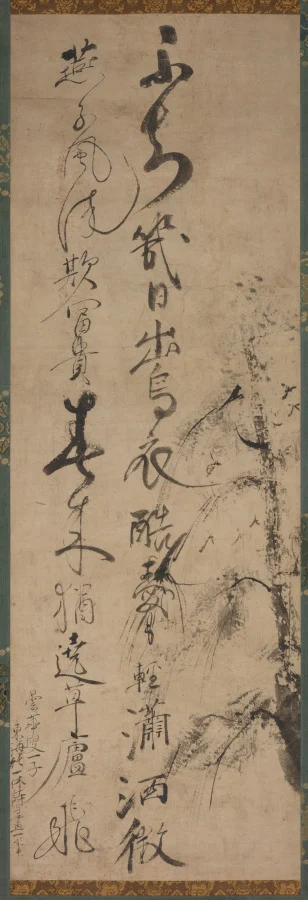
The famed Buddhist monk Ikkyū is best remembered for his calligraphy. Calligraphic conventions of his time called for brushwork that did not vary much in style from character to character. However, as Ikkyū’s lines progress, his brushwork wanders between standard script and a sort of shorthand, marked by an uneven distribution of ink and a reduction of the characters to only the most necessary strokes. Ikkyū’s direct communication of emotion via brushwork became characteristic of the works produced by monks affiliated with the temple Daitokuji later in the Edo period (1615–1868).
観測売買: 0 · 比較売買: 0 · 来歴: 2 · 展覧会: 2.