比較売買
同じアーティストの公開売買を、技法、制作年、寸法、売買の新しさで順位付けします。
公開利用可能な比較売買で、現在の証拠基準を満たすものがありません。RELICT は研究専用・ライセンス限定の情報で表を埋めません。
観測売買の事実、比較証拠、アーティスト指数の履歴、モデル研究は区別します。
同じアーティストの公開売買を、技法、制作年、寸法、売買の新しさで順位付けします。
Probably Cassirer, Amsterdam [the mounts of photos in both the Rijksbureau voor Kunsthistorische Doc...
the Witt photo is also annotated “Worcester, Mass.”
see also Vroom 1945 and Bergstrom 1956]. M. Knoedler & Co., New York by 1935 [receipt dated Septemb...
the number A 1559 printed on a label on the back may be the Knoedler’s stock number]
sold to the Art Institute, 1935.
Probably Cassirer, Amsterdam [the mounts of photos in both the Rijksbureau voor Kunsthistorische Documentatie, The Hague, and the Witt Library, London, are marked Cassirer, Amsterdam, 1939, though the picture was at the Art Institute from late 1935; the Witt photo is also annotated “Worcester, Mass.”; see also Vroom 1945 and Bergstrom 1956]. M. Knoedler & Co., New York by 1935 [receipt dated September 9, 1935 in Registrar’s office; the number A 1559 printed on a label on the back may be the Knoedler’s stock number]; sold to the Art Institute, 1935.
Worcester, Worcester Art Museum, "Condition; Excellent," March - April 1951, cat. 8.
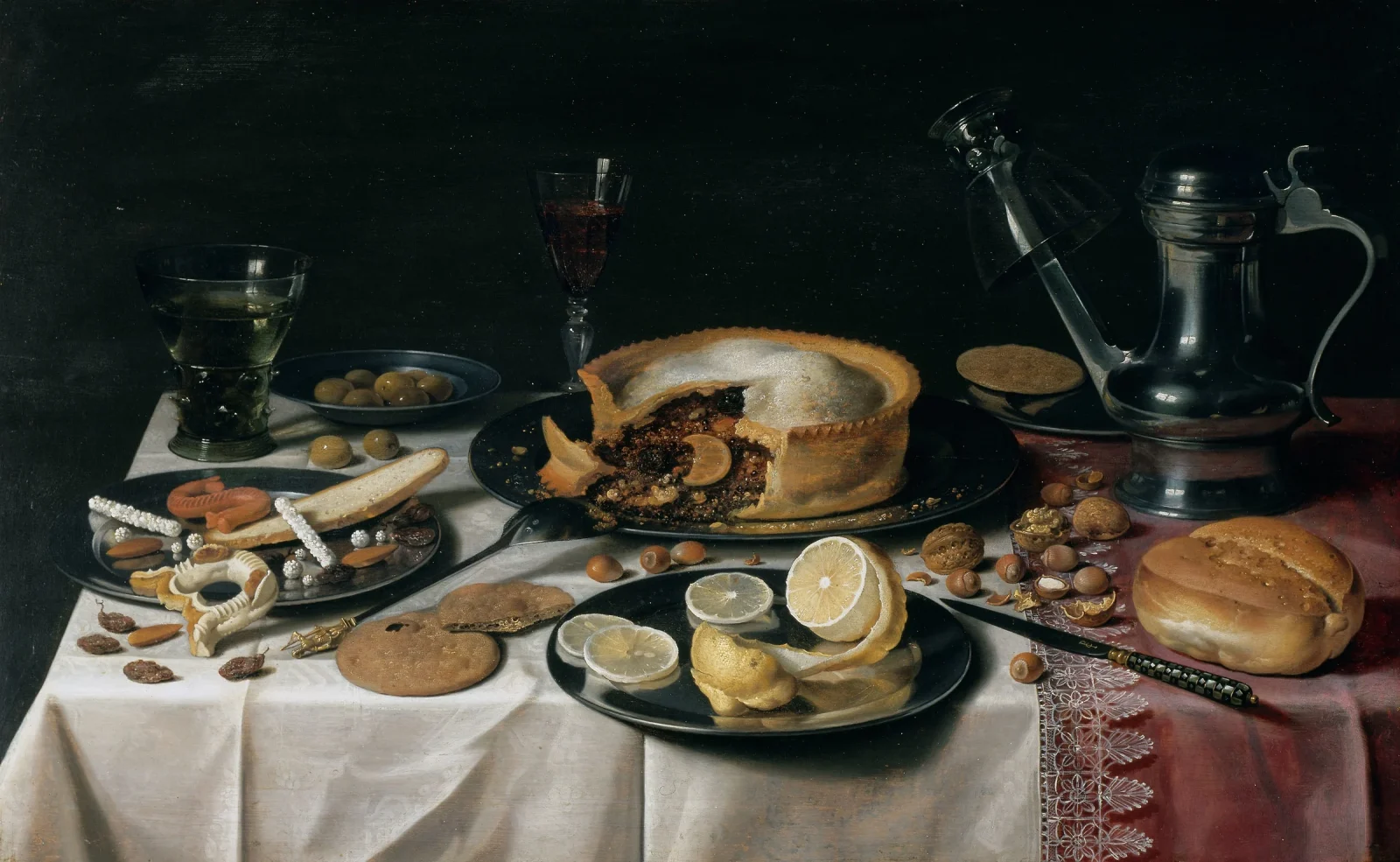
<p>Around 1600, as the Dutch economy boomed, large-scale still lifes depicting luxury goods emerged as a genre that appealed to a sophisticated clientele. Pieter Claesz. was a leading painter of a type of still life often described as a “banquet piece,” which featured sumptuous foods and opulent serving vessels, typically strewn across an elaborately dressed tabletop. These costly goods—like the lemon, olives, sweetmeats, and lace-edged damask tablecloth in this painting—were sometimes depicted in a state of decay to suggest the transitory nature of coveted earthly things. The well-preserved items here instead celebrate wealth and its lavish display.</p>
観測売買: 2 · 比較売買: 0 · 来歴: 5 · 展覧会: 1.