Indietro
Twenty-three Deity Nairatma Mandala
The Cleveland Museum of Art · Purchase from the J. H. Wade Fund
Museum

Twenty-three Deity Nairatma Mandala

c. 1375

Analisi di mercato

Vendite osservate, prove comparabili, storia dell’indice artista e ricerche modellate restano distinti.

Prove pubbliche
Ultimo prezzo noto—0 matched observed sales
Mediana osservata—
Vendite osservate0
Indice artista—
A quest’opera non è collegata una vendita osservata normalizzata con diritti verificati. Non viene mostrata una cronologia prezzi artificiale.
Indice artista non disponibileNessun calcolo pubblico completato dell’indice artista.Il contesto dell’artista non è una valutazione dell’opera.

Vendite comparabili

Vendite pubbliche dello stesso artista ordinate per tecnica, anno di creazione, dimensioni e data di vendita.

Ordinato per prove
Nessuna vendita comparabile con diritti pubblici soddisfa i criteri attuali. RELICT non riempie la tabella con fatti riservati alla ricerca o al solo accesso con licenza.
Provenienza

Pubblico
?–1993

(Rossi and Rossi, Ltd., London, UK, sold to the Cleveland Museum of Art)

1993–

The Cleveland Museum of Art, Cleveland, OH

Testo di provenienza della fonte

(Rossi and Rossi, Ltd., London, UK, sold to the Cleveland Museum of Art) The Cleveland Museum of Art, Cleveland, OH

The Cleveland Museum of ArtAffidabilità 100%

Mostre

Pubblico
Testo mostre della fonte

Focus: Tantra in Buddhist Art. The Cleveland Museum of Art, Cleveland, OH (organizer) (May 5-September 15, 2013).

The Cleveland Museum of ArtAffidabilità 100%
Opere pubbliche collegate

Opere vicine nel catalogo

Esplora il catalogo →

Panoramica documentata Evidenze

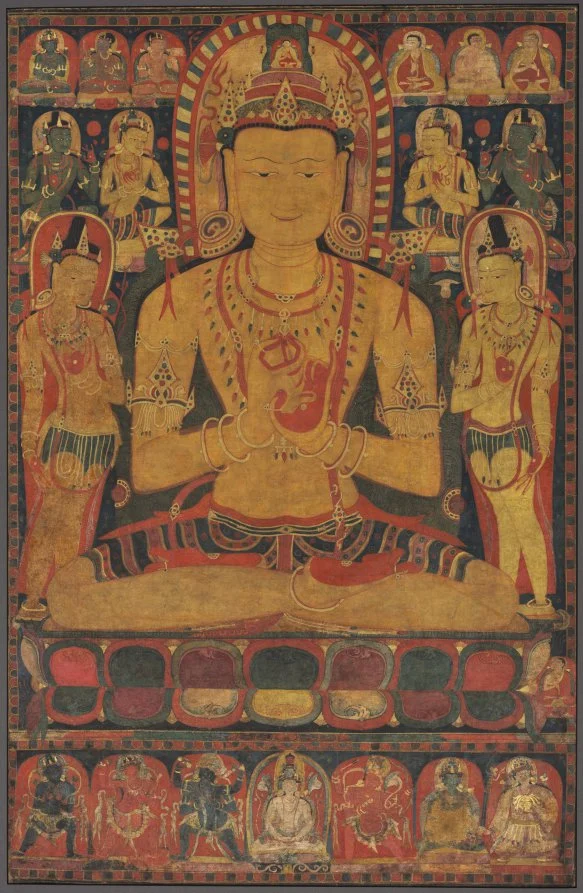
One of the main types of imagery in tantric Buddhist art is the mandala, a two-dimensional diagram of the realm of an enlightened being. This mandala depicts the palace of Nairatma, who dances in the center surrounded by her entourage. Using the painting as a guide, the tantric practitioner in meditation mentally projects the two-dimensional plan into three-dimensional space and enters into it. The outermost ring contains depictions of the cremation grounds, where corpses are being burned and consumed, as well as tantric yogis and masters who work there in order to understand the impermanence of the body, defeat their fear of death, and overcome irrational aversions to impure aspects of life. Virupa is depicted twice, always pointing to arrest the sun with his raised left hand. He sits among the row of lineage masters along the top edge, and is also depicted in the topmost segment of the ring of cremation grounds, being served a cup of liquor. Along with lineage masters at the top of this impressive painting, bodhisattvas and important masters are depicted in the spandrels, each identified by an inscription.

The Cleveland Museum of ArtAffidabilità 100%

Stato delle prove

Vendite osservate: 0 · Vendite comparabili: 0 · Provenienza: 2 · Mostre: 1.

Place Of OriginShort DescriptionProvenance TextExhibition HistoryCredit Line