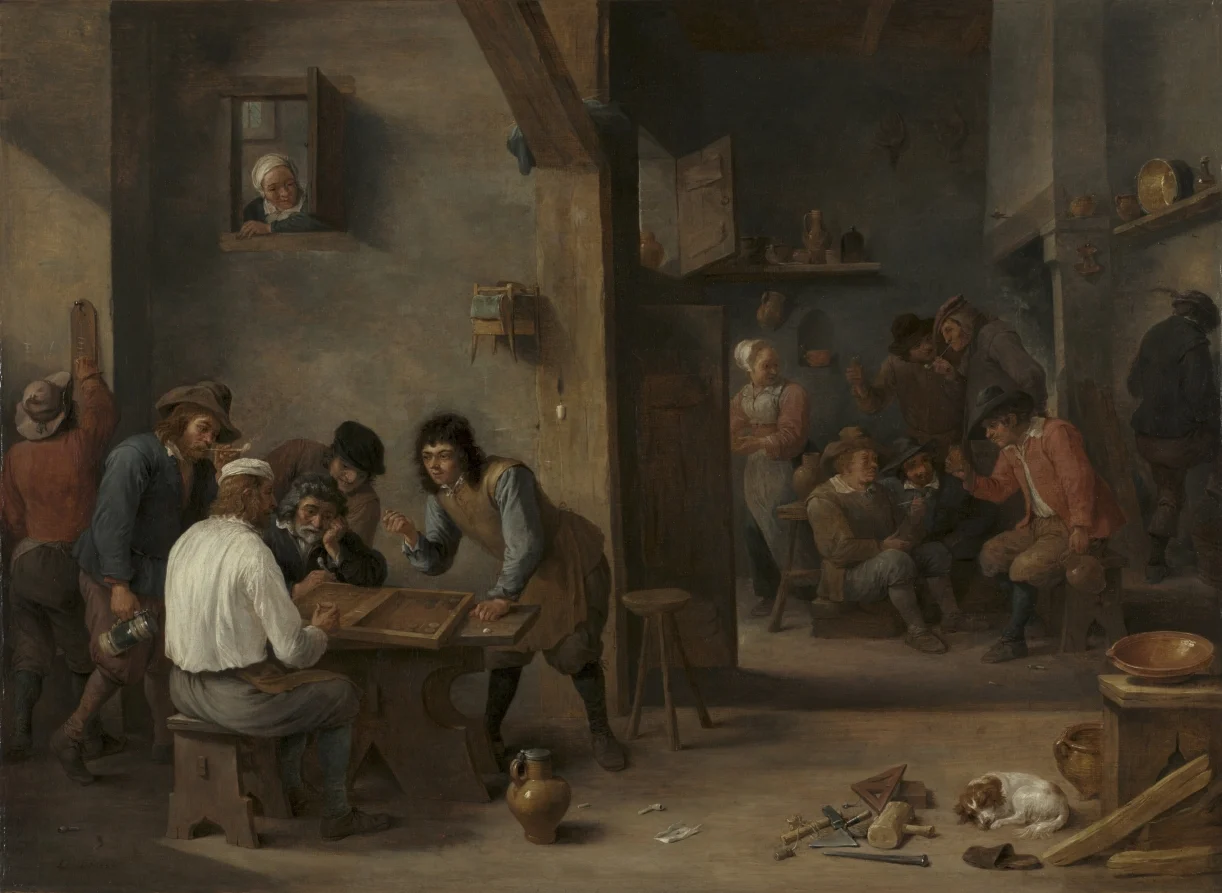
Game of Backgammon
The Cleveland Museum of Art · Gift of Mr. and Mrs. Samuel D. Wise
Museum

Game of Backgammon

1640s
David Teniers (Flemish, 1610–1690) visual detail
ArtisteDavid Teniers (Flemish, 1610–1690)
Voir l’artiste →

Analyse de marché

Les ventes observées, preuves comparables, historiques d’indice et recherches modélisées restent distincts.

Preuves publiques
Dernier prix connu—0 matched observed sales
Médiane observée—
Ventes observées0
Indice d’artiste—
Aucune vente observée normalisée aux droits vérifiés n’est liée à cette œuvre. Aucun historique de prix artificiel n’est affiché.
Indice d’artiste indisponibleAucun calcul public d’indice d’artiste terminé.Le contexte d’un artiste n’est pas une estimation d’œuvre.

Ventes comparables

Ventes publiques du même artiste classées par technique, année de création, dimensions et date de vente.

Classé selon les preuves
Aucune vente comparable aux droits publics ne satisfait les critères actuels. RELICT ne remplit pas le tableau avec des faits réservés à la recherche ou sous licence uniquement.

Provenance

Public
1674-1723

Philippe II, Duke of Orléans (1674–1723), Regent of France

1723-1752

Louis I Duke of Orléans (1703–1752)

1752-1785

Louis Philippe I (1725–1785), Duke of Orléans

1785-1792

Louis-Philippe II (1747–1793), Duke of Orléans / Philippe Égalité

1792-1793

Brought to London by Thomas Moore Slade, (exhibited for sale in the Royal Academy, London, April 179...

Provenance

George Hibbert (1757–1837), London, England

-1816

Thomas Penrice (d. 1816), Great Yarmouth, England, by inheritance to John Penrice

Texte de provenance source

Philippe II, Duke of Orléans (1674–1723), Regent of France Louis I Duke of Orléans (1703–1752) Louis Philippe I (1725–1785), Duke of Orléans Louis-Philippe II (1747–1793), Duke of Orléans / Philippe Égalité Brought to London by Thomas Moore Slade, (exhibited for sale in the Royal Academy, London, April 1793) George Hibbert (1757–1837), London, England Thomas Penrice (d. 1816), Great Yarmouth, England, by inheritance to John Penrice John Penrice Sr. (1787-1844), sold, Christie's (Sale: Christie's, London, England, 07/06/1844, to Farrer) Farrer Private collection, sold, Christie's, London (Sale: Christie's, London, England, 07/17/1925, no. 119 through S. A. Hecht, London, England to Mr. and Mrs. Samuel Wise) Mr. and Mrs. Samuel D. Wise (Cleveland, Ohio), by gift to the Cleveland Museum of Art, 1943 The Cleveland Museum of Art, Cleveland, OH

The Cleveland Museum of ArtFiabilité 100%
Expositions

Public
Texte d’exposition source

Art: The International Language. The Cleveland Museum of Art (October 2-November 4, 1956). Images of History. Denver Art Museum, Denver, CO (organizer) (March 14-May 21, 1961). Re-presenting the Baroque. Samuel P. Harn Museum of Art (organizer) (October 1, 1997-April 1, 1998). Images of History, Denver Art Museum, CO (03/14/1961- 05/21/1961). Royal Academy, London, England (April 1793).

The Cleveland Museum of ArtFiabilité 100%

Vue d’ensemble sourcée Éléments probants

The game of backgammon has a long and popular history which can be traced back many centuries. The version of the game as it is played in modern times first appeared in the 1400s under various names. Its current appellation was coined around the same time as the date of this painting. Backgammon was exceptionally popular in the 1600s, and was often played for money or other wagers. The two men on the left side of this painting are clearly involved in a high stakes game of backgammon. A three-man cluster has gathered to watch them lay their bets, while another tallies their points on a scoreboard. The young lady in the right corner of the room otherwise surrounded by men and the older women who looks down on the game of backgammon from a window, both indicate that the interior presented in this painting is probably the gaming room of a brothel. Courtesans often worked out of such game rooms, providing further entertainment for men. Depictions of games, like procurement scenes, often symbolized moralizing virtues. Games were considered at best folly and at worst immoral. Backgammon was often used to represent the foolishness or wickedness of betting and wasting one's time.

The Cleveland Museum of ArtFiabilité 100%

État des preuves

Ventes observées: 0 · Ventes comparables: 0 · Provenance: 14 · Expositions: 3.

Place Of OriginShort DescriptionProvenance TextExhibition HistoryCredit Line