Dragon
The Cleveland Museum of Art · Purchase from the J. H. Wade Fund
Museum

Dragon

c. 1250–79
Fachang Muqi (Chinese, 1220–1280) visual detail
ArtistaFachang Muqi (Chinese, 1220–1280)
Ver artista →

Análisis de mercado

Los hechos de ventas observadas, pruebas comparables, historial del índice y estudios modelados permanecen separados.

Pruebas públicas
Último precio conocido—0 matched observed sales
Mediana observada—
Ventas observadas0
Índice de artista—
Esta obra no tiene una venta observada normalizada con derechos autorizados. No se muestra un historial de precios artificial.
Índice de artista no disponibleNo existe un cálculo público completo del índice del artista.El contexto del artista no es una valoración de la obra.

Ventas comparables

Ventas públicas del mismo artista ordenadas por técnica, año de creación, dimensiones y antigüedad de venta.

Clasificado por pruebas
Ninguna venta comparable con derechos públicos cumple los criterios actuales. RELICT no rellena la tabla con datos exclusivos de investigación o de acceso bajo licencia.

Procedencia

Público
Procedencia

Ashikaga Yoshimitsu 足利義滿 [1358–1408]

Procedencia

Ashikaga Yoshinori 足利義教 [1394–1441] or 足利義政 [1436–1490] (Zakka shitsu yin 雜華室印)

Procedencia

Tokugawa Iemitsu 德川家光 [1604–1651]

Procedencia

Viscount Sakai 子爵 酒井氏 [late 1800s–early 1900s]

?-1958

(Howard Hollis and Company, Cleveland, OH, sold to the Cleveland Museum of Art)

1958-

The Cleveland Museum of Art, Cleveland, OH

Texto de procedencia de origen

Ashikaga Yoshimitsu 足利義滿 [1358–1408] Ashikaga Yoshinori 足利義教 [1394–1441] or 足利義政 [1436–1490] (Zakka shitsu yin 雜華室印) Tokugawa Iemitsu 德川家光 [1604–1651] Viscount Sakai 子爵 酒井氏 [late 1800s–early 1900s] (Howard Hollis and Company, Cleveland, OH, sold to the Cleveland Museum of Art) The Cleveland Museum of Art, Cleveland, OH

The Cleveland Museum of ArtFiabilidad 100%

Exposiciones

Público
Texto de exposiciones de origen

1000 Jahre Chinesische Malerei. Haus der Kunst, Munich, Mùnich, Germany (organizer) (October 16-December 13, 1959). Chinese Art. Smith College Museum of Art, Northampton, MA (organizer) (January 8-26, 1962). The Art of Southern Sung China. The Asia Society Museum, New York, NY (organizer) (February 15-April 15, 1962). The Colors of Ink. Asia House Galleries (January 10-March 3, 1974); The Cleveland Museum of Art, Cleveland, OH (organizer) (April 9-May 12, 1974). Eight Dynasties of Chinese Painting. The Nelson-Atkins Museum of Art (November 7, 1980-January 4, 1981); The Cleveland Museum of Art (February 11-March 29, 1981); Tokyo National Museum (October 4-November 17, 1982). Roaring Tigers and Leaping Carp: Decoding the Symbolic Language of Chinese Animal Painting. The Cincinnati Art Museum, Cincinnati, OH (organizer) (October 9, 2009-January 3, 2010). Six Dynasties of Chinese Painting (Chinese art rotation). The Cleveland Museum of Art, Cleveland, OH (organizer) (November 10, 2023-May 5, 2024). Six Dynasties of Chinese Painting Part 2. The Cleveland Museum of Art, Cleveland, OH (organizer) (May 10-September 1, 2024). Chinese Paintings. The Cleveland Museum of Art, Cleveland, OH (July 19-August 7, 1960). Japanese Decorative Style. Cleveland Museum of Art, Cleveland, OH (August 30-October 15, 1961) Southern Sung. Asia House Gallery, New York, NY, (1967?). Cahill, cat. no. 28. Main Asian Rotation (Gallery 119). The Cleveland Museum of Art, Cleveland, OH (March 12-July 16, 2003).

The Cleveland Museum of ArtFiabilidad 100%
Resumen con fuentes Evidencias

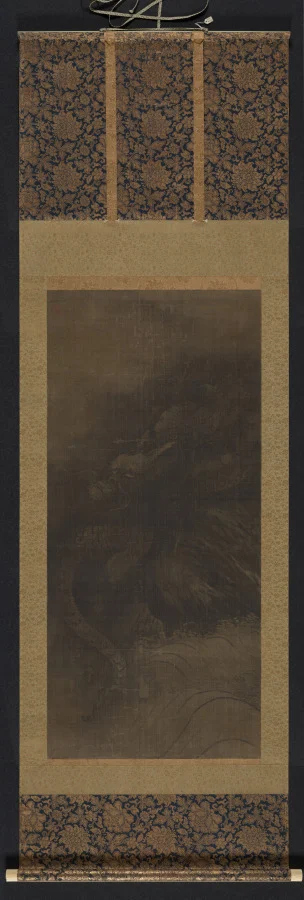
The dragon and tiger are tied to the philosophical concept of yin and yang, which describes opposite but complementary forces. The dragon occupies a tiered background of waves and mist. Its luminous head emerges from the darker passages, and its narrow twisting body is serpent-like. By contrast, the close-up view of the tiger emphasizes its bulk. The tiger bends its head to lick its paw while its tail curls in the foreground. <br><br>In their original Chan Buddhist context, this pair of scrolls likely flanked a central image, like the Bodhisattva Guanyin. The silk has darkened over the centuries, and the slight reddish shading in the tiger’s tongue and nose has faded.

The Cleveland Museum of ArtFiabilidad 100%

Estado de las pruebas

Ventas observadas: 0 · Ventas comparables: 0 · Procedencia: 6 · Exposiciones: 8.

Place Of OriginShort DescriptionProvenance TextExhibition HistoryCredit Line