Vergleichsverkäufe
Öffentliche Verkäufe desselben Künstlers, geordnet nach Technik, Entstehungsjahr, Maßen und Aktualität des Verkaufs.
Beobachtete Verkäufe, Vergleichsnachweise, Künstlerindexhistorie und modellierte Forschung bleiben getrennt.
Öffentliche Verkäufe desselben Künstlers, geordnet nach Technik, Entstehungsjahr, Maßen und Aktualität des Verkaufs.
Probably Don Luis Portilla, Madrid, by 1880
sold, Madrid, 1880, no. 89 [first suggested by Campbell 1981
then attributed to Rogier van der Weyden, is described as “La Vírgen y el Niño
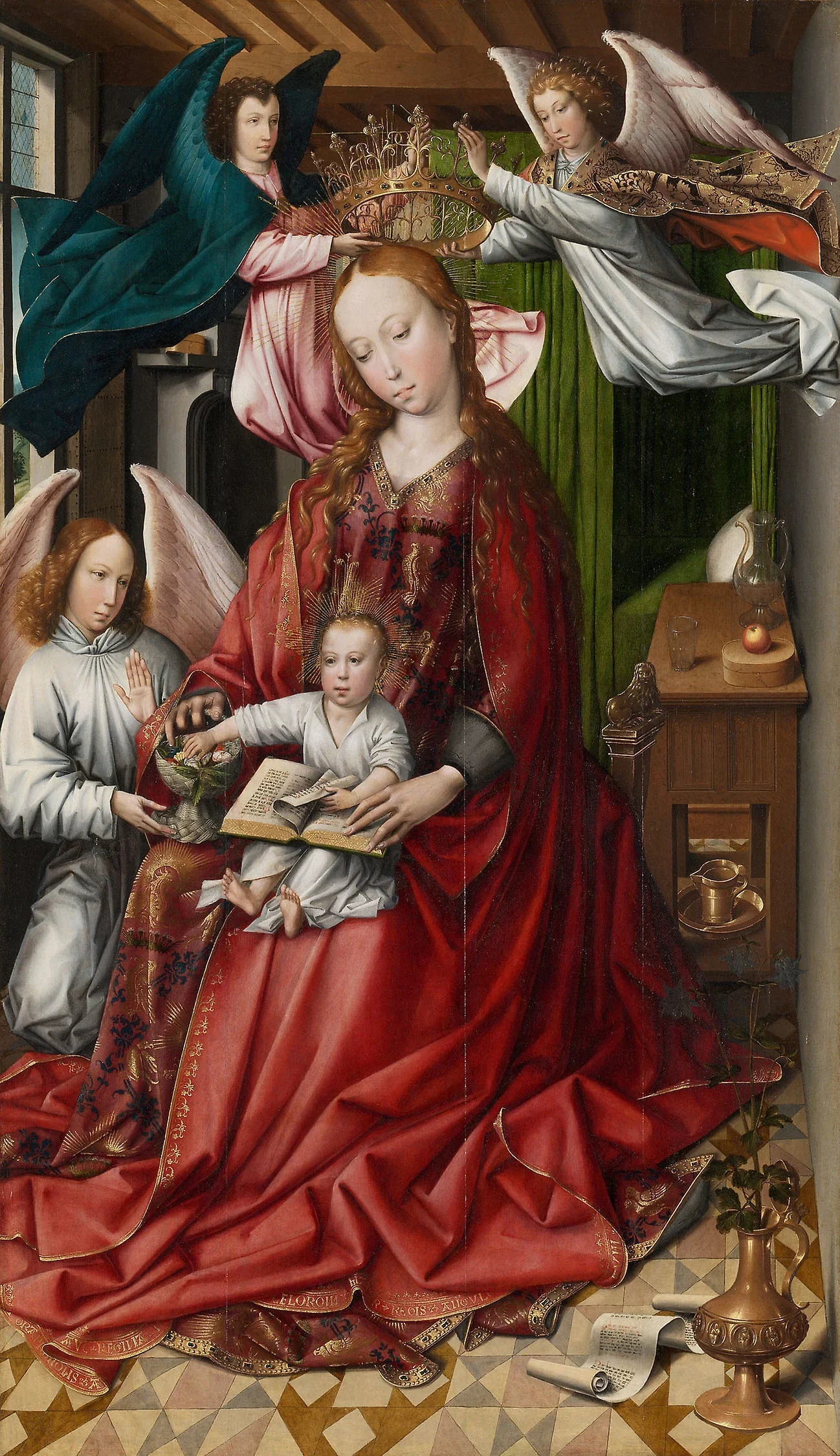
dos Angeles la coronan y otro presenta al Niño un canastillo de flores” (the Virgin and Child
two angels crown her and another presents a basket of flowers to the Child)]. J. G. Arthur, London [...
sold to Colnaghi, London, Dec. 1906, with a half-share owned by Knoedler, Paris and New York [Colnag...
sold by Knoedler, New York, to Ryerson, for $15,000, Oct. 31, 1912 [bill of sale, Art Institute Arch...
Probably Don Luis Portilla, Madrid, by 1880; sold, Madrid, 1880, no. 89 [first suggested by Campbell 1981; then attributed to Rogier van der Weyden, is described as “La Vírgen y el Niño; dos Angeles la coronan y otro presenta al Niño un canastillo de flores” (the Virgin and Child; two angels crown her and another presents a basket of flowers to the Child)]. J. G. Arthur, London [according to Colnaghi stock card]; sold to Colnaghi, London, Dec. 1906, with a half-share owned by Knoedler, Paris and New York [Colnaghi stock card]; sold by Knoedler, New York, to Ryerson, for $15,000, Oct. 31, 1912 [bill of sale, Art Institute Archives]; Martin A. Ryerson (d. 1932), Chicago; on loan to the Art Institute from 1913; bequeathed to the Art Institute, 1933.
New York, Kleinberger, Loan Exhibition of Flemish Primitives, 1929, no. 33. Art Institute of Chicago, A Century of Progress, 1933, no. 37. Art Institute of Chicago, A Century of Progress, 1934, no. 118.
<p>The gold text on the bottom edge of the Virgin Mary’s red mantle translates as “Hail, Queen of the heavens, Mother of the king of angels.” These lines, from a hymn called a Marian antiphon, were famously set to music as a choral composition in the 15th century. This kind of polyphonic music, requiring multiple trained voices employed at great expense, was associated with the extravagant culture of the Brussels court. Its evocation here, like the bejeweled crown lowered onto Mary’s head, serves to honor the Virgin and to inspire aural worship.</p>
Beobachtete Verkäufe: 2 · Vergleichsverkäufe: 0 · Provenienz: 10 · Ausstellungen: 3.