Comparable Sales
Same-artist public sales ranked by medium, creation year, dimensions and sale recency.
No public-rights comparable sales meet the current evidence criteria. RELICT does not fill the table with research-only or licensed-only facts.
Observed sale facts, comparable evidence, artist index history and modeled research remain separate.
Same-artist public sales ranked by medium, creation year, dimensions and sale recency.
Alessandro Contini-Bonacossi collection, Rome. Sold 1926 to Ehrich Galleries, New York. Bought by Mr...
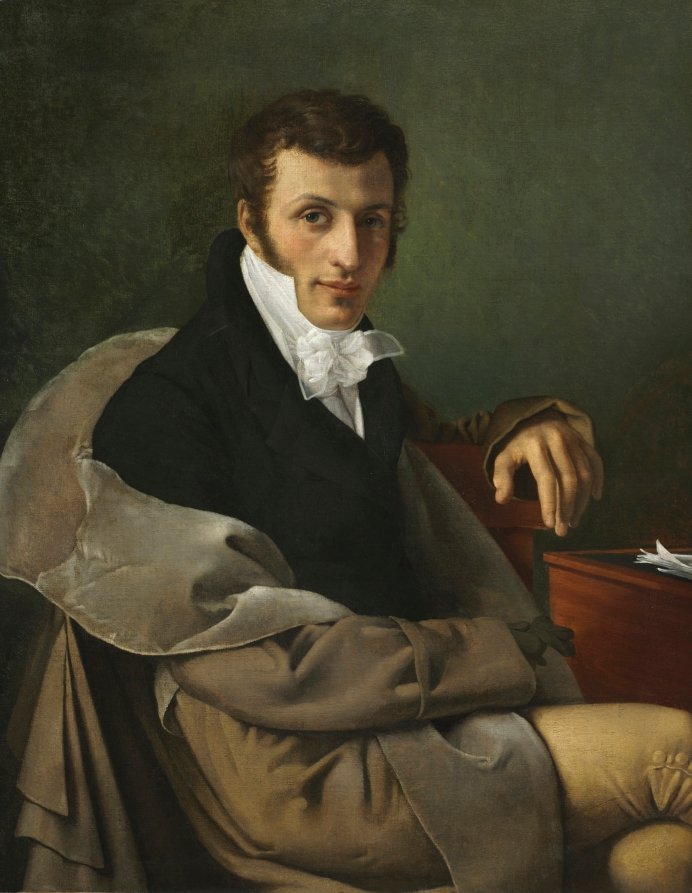
Alessandro Contini-Bonacossi collection, Rome. Sold 1926 to Ehrich Galleries, New York. Bought by Mrs. Perry W. Harvey, Cleveland, 1929. Given to the CMA in 1937.
Masterpieces of Art from the New York and San Francisco World's Fairs. The Cleveland Museum of Art, Cleveland, OH (February 7-March 7, 1940). An Exhibition of Great Paintings in Aid of the Canadian Red Cross and of Small Pictures by Members of The Ontario Society of Artists. Art Gallery of Ontario, Ontario M5T 1G4, Canada (organizer) (co-organizer) (November 15-December 15, 1940). The Silver Jubilee Exhibition. The Cleveland Museum of Art, Cleveland, OH (organizer) (June 23-September 28, 1941). French Drawings and Watercolors from French Public and Private Collections. The Cleveland Museum of Art, Cleveland, OH (January 6-February 15, 1942). 19th and 20th Century French Art and Leonard C. Hanna, Jr. Loans. The Cleveland Museum of Art, Cleveland, OH (organizer) (June 22-September 1, 1943). Baron Gros, Painter of Battles: The First Romantic Painter. The Cleveland Museum of Art, Cleveland, OH (organizer) (March 8-April 15, 1956). The Fifth Loan Exhibition of Old and Modern Masters. Exh. cat. The Detroit Institute of Arts (October 1927), no. 77, Ingres, Portrait of a Young Man. Canvas: 27 ½ inches by 36 inches. Lent by the Erlich Galleries. New York, Ehrich Galleries. (1929). cma. French Art since Eighteen Hundred (1929), CMA Bulletin 16 (1929): 159. Pittsburgh, Carnegie Institute. A Survey of French Painting (1936), no. 11 (repr.), Ingres, Portrait of a Man, lent by Mrs. Perry W. Harvey. cma. Catalogue of the Twentieth Anniversary Exhibition of the Cleveland Museum of Art. (1936), no. 283 (repr.). San Francisco, Golden Gate International Exhibition. Masterworks of Five Centuries (1939), no. 120 (repr.) (as Ingres). cma. Masterpieces of Art from New York and San Francisco World's Fair (1940), no. 41. Toledo Museum of Art; Art Gallery of Toronto. The Spirit of Modern France. An Essay on Painting in Society 1745-1946 (1946-47), no. 15, A Gentleman of Rome 1807-1811. Cincinnati, Taft Museum. The Regency, Empire, and Directoire Periods (1947), no cat. Detroit Institute of Arts. French Painting from David to Courbet (1950), no. 21 (as Ingres). Buffalo, N.Y., Albright Art Gallery. Forerunners of Modern Painting (1952); see Gallery Notes (May-October 1952), 10 (repr.) (as Ingres), 13-14 (repr.).
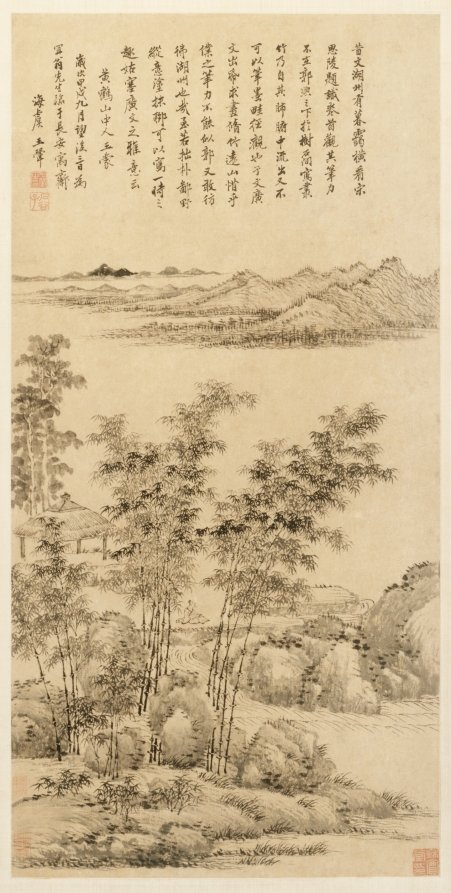
Wang Hui (Chinese, 1632–1717) · 1694

Unknown artist · 1755
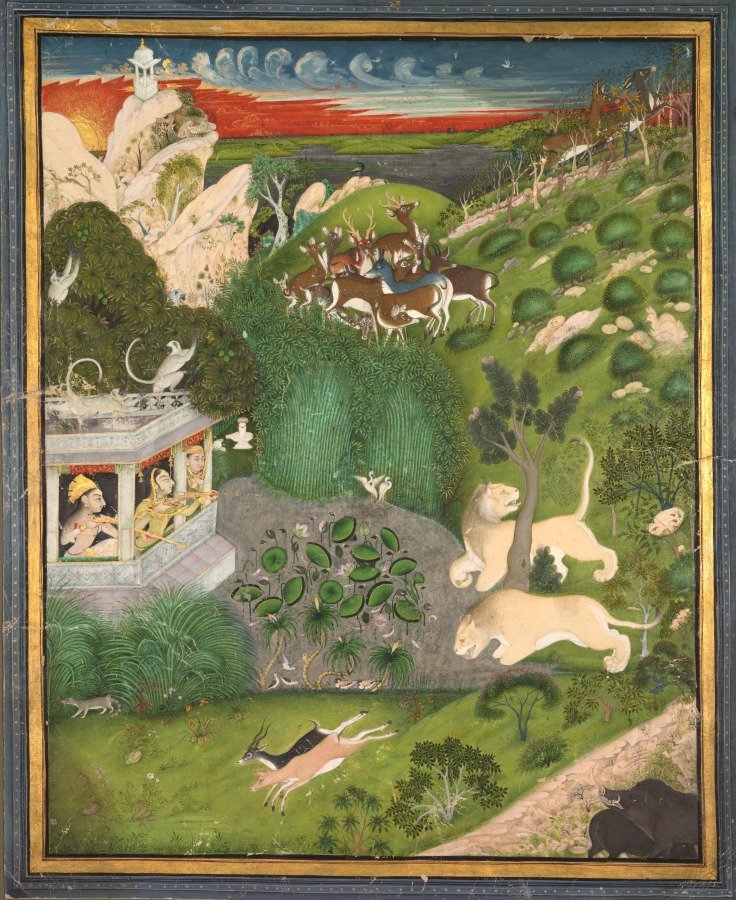
Unknown artist · 1805

Léon Cogniet (French, 1794–1880) · 1817

Wu Li (Chinese, 1632–1718) · 1670
Born in a small village in Belgium, Paelinck attended a local drawing academy as a youth. His skill earned him a scholarship to study in Paris where he worked with Jacques-Louis David (1748–1825), the leading French neoclassical master and official court painter of Napoleon I. Paelinck later moved to Rome to study ancient art firsthand and to participate in the city's lively international art scene. Paelinck's attire shows him as a dandy, wearing fashionable, subtly colored clothes. Over his black suit, he wears a box-coat—a garment having a wide, velvet collar originally associated with coachmen but popular among artists in Rome during the early 19th century. The coat demonstrates Paelinck's skill at depicting textures. Likewise, the simplicity of his desk and chair—based on ancient Greek and Roman models—reflects the highest fashion of the time.
0 observed sales · 0 comparable sales · 1 structured provenance events · 6 structured exhibitions.