Comparable Sales
Same-artist public sales ranked by medium, creation year, dimensions and sale recency.
No public-rights comparable sales meet the current evidence criteria. RELICT does not fill the table with research-only or licensed-only facts.
![Page of disasters, from the Tarikh-i Alfi (History of the Thousand [Years])](https://relict.cloud/storage/artworks/managed/76/76a53e53d520637b57db052a5b49edc9bbccc6ac32549b45c8a55013e91f4b2b.jpg)
Observed sale facts, comparable evidence, artist index history and modeled research remain separate.
Same-artist public sales ranked by medium, creation year, dimensions and sale recency.
(Ajit Ghose, Calcutta, India, sold to the Cleveland Museum of Art)
The Cleveland Museum of Art, Cleveland, OH
(Ajit Ghose, Calcutta, India, sold to the Cleveland Museum of Art) The Cleveland Museum of Art, Cleveland, OH
Art and Stories from Mughal India. The Cleveland Museum of Art, Cleveland, OH (organizer) (July 31-October 23, 2016).
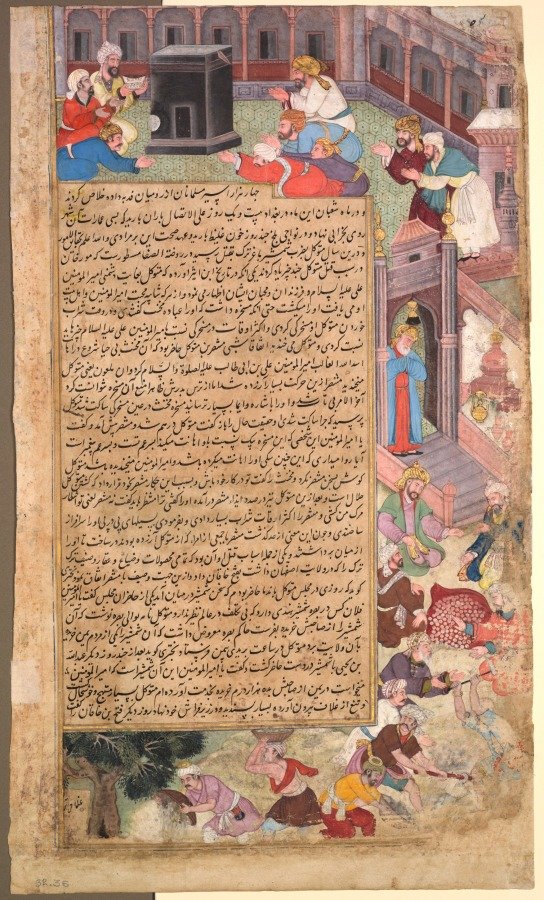
Unknown artist · 1590
![Page of disasters, from the Tarikh-i Alfi (History of the Thousand [Years])](https://relict.cloud/storage/artworks/managed/b2/b2e38435de86ba84e0d29d92a20855dba8b2d6c1f2fab398ede1f938648c5c98.jpg)
Unknown artist · 1590
Sanwalah (Indian, active c. 1580–1600) · 1590

Basavana (Indian, active c. 1560–1600) · 1591

Lal (Indian, active c. 1555–1600) · 1591
The 1,000th anniversary of Islam, according to the Hijri calendar followed by the Mughals and all Muslims, occurred during Akbar’s reign in 1592. He commemorated this milestone in many ways, including the commissioning of a new history of the Islamic world since the death of the Prophet Muhammad in 632. The episode discussed on this page took place during the 800s, when hailstorms beset Egypt and an earthquake hit Syria. The ruling caliph at the time was strongly prejudiced against Muslims who belonged to the Shi‘ite branch of Islam. Akbar seemed to be asking his artists to emphasize the natural disasters that took place, suggesting that they occurred as a result of the ruler’s intolerance.
0 observed sales · 0 comparable sales · 2 structured provenance events · 1 structured exhibitions.