المبيعات المقارنة
مبيعات معلنة لأعمال الفنان نفسه، مرتّبة بحسب الخامة والتقنية وسنة إنجاز العمل وأبعاده وتاريخ بيعه.
لا توجد مبيعات مقارنة ذات حقوق عامة تستوفي معايير الأدلة الحالية. لا تملأ RELICT الجدول بوقائع مخصصة للبحث أو للوصول المرخص فقط.

تُعرض سجلات المبيعات المرصودة وبيانات المبيعات المقارنة وتاريخ مؤشر الفنان والأبحاث القائمة على النماذج كلٌّ على حدة.
مبيعات معلنة لأعمال الفنان نفسه، مرتّبة بحسب الخامة والتقنية وسنة إنجاز العمل وأبعاده وتاريخ بيعه.
Collection in Pusan, Korea, to Gordon K. Mott
Gordon K. Mott [1914-1998], Lakewood, OH, bequest to the Cleveland Museum of Art
The Cleveland Museum of Art, Cleveland, OH
Collection in Pusan, Korea, to Gordon K. Mott Gordon K. Mott [1914-1998], Lakewood, OH, bequest to the Cleveland Museum of Art The Cleveland Museum of Art, Cleveland, OH
The Lure of Painted Poetry: Japanese and Korean Art. The Cleveland Museum of Art, Cleveland, OH (organizer) (April 15-August 21, 2011). Old and New in Korean Art. The Cleveland Museum of Art, Cleveland, OH (organizer) (October 28, 2022-April 23, 2023).
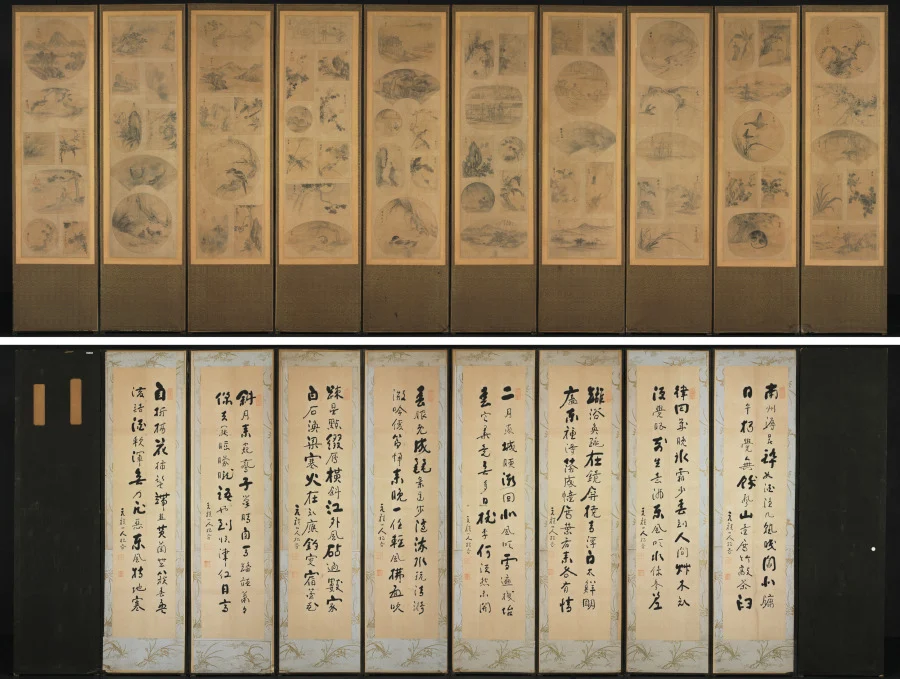
The front of this screen features an assortment of subjects: birds and flowers, landscapes, and scenes of everyday life, mostly in monochromatic ink with light colors. The screen’s reverse side conveys a number of classical poems about the fleeting beauty of the four seasons. Traditionally, only one side of a folding screen bears painted or embroidered images, since these were used as a background furnishing. In Korean houses by the 1800s and early 1900s, however, two-sided folding screens became noticeably popular, possibly inspired by Japanese double-sided folding screens, which mainly served as room dividers in Japanese households.
المبيعات المرصودة: 0 · المبيعات المقارنة: 0 · سجل المنشأ والملكية: 3 · المعارض: 2.