‘Radiant Geometries’ at Rice’s Moody Center Explores Indigenous Knowledge Through Art
A new group exhibition at Rice University’s Moody Center for the Arts brings together contemporary Indigenous and Latin American artists working at the intersection of math, science, and art. Runs September 4–December 19, 2026.
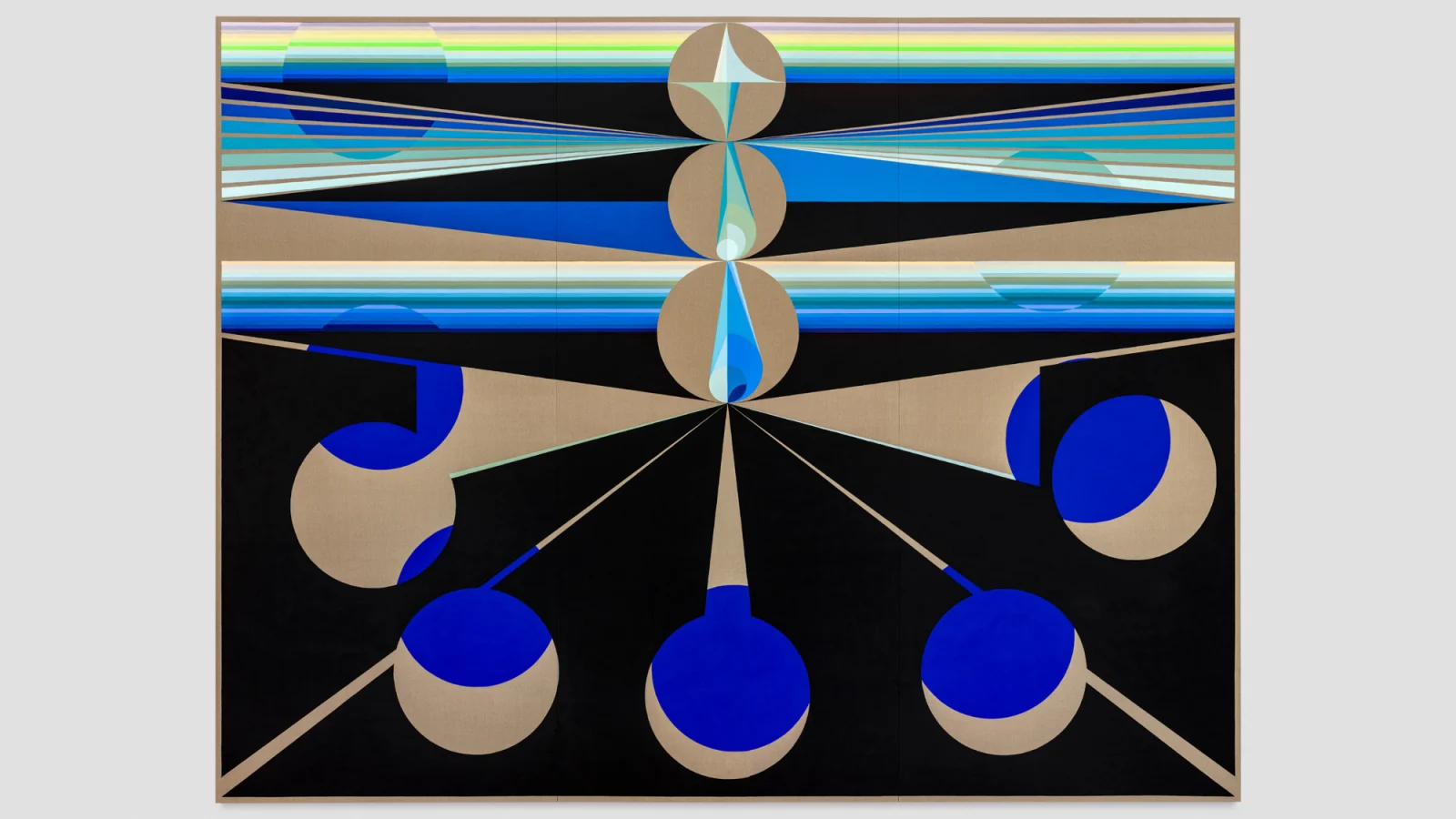
Rice University’s Moody Center for the Arts has announced Radiant Geometries: Vectors of Knowledge from the Indigenous Americas, a group exhibition opening September 4 and running through December 19, 2026. The show positions North, Central, and South America as interconnected regions, bringing together contemporary Indigenous and Latin American artists who engage with mathematics, metaphysics, and art.
Participating artists include Melissa Cody, Nanibah Chacon, Jordan Ann Craig, Patricia Domínguez, Sara Flores, Kite, Natalia Montoya Lecaros, Patrick Martinez, Cisco Merel, Caroline Monnet, and Eamon Ore-Giron. Their works—paintings, sculptures, textiles, videos, and site-specific commissions—collectively foreground relational knowledge systems at a time of global concern over technology’s social and environmental consequences.
The exhibition is set on the campus of a leading research university, a context that underscores its thematic focus on the symbiotic relationship between art, math, technology, and science, often expressed through abstraction. Several works illustrate this convergence: Sara Flores’s paintings highlight interdependence among life forms and interspecies care, while Patrick Martinez’s painted sculpture draws on the pre-Columbian murals of Cacaxtla, positioning Indigenous architecture as a form of material knowledge and urban intelligence.
Other artists engage with specific traditions and histories. Natalia Montoya Lecaros’s totemic sculptures derive from an Aymara ceremonial dance honoring agricultural cycles; Caroline Monnet’s Styrofoam installation, etched with Anishinaabe iconography, reconsiders colonial legacies in architecture; Patricia Domínguez’s videos explore astronomy and plant intelligence to bridge spiritual and scientific divides; and Cisco Merel’s totemic work references protective sigils from Guna textile traditions. Meanwhile, Melissa Cody’s jacquard tapestry fuses Navajo textile traditions with computational aesthetics.
Newly commissioned works by Ore-Giron and Chacon extend the exhibition’s thesis that knowledge is an evolving technology, transmitted across generations while responding to the future. The artists’ contributions aim to illuminate the ongoing relevance of Indigenous knowledge systems in contemporary discourse.
The exhibition opens with a reception featuring remarks from Nanibah Chacon and Natalia Montoya Lecaros. Public programming throughout the run includes a collaboration with Danza Azteca Macuilxochitl and Nameless Sound, as well as a conversation between Eamon Ore-Giron and Rice professor Lori Boornazian Diel, joined by Steven Gullberg, Professor of Cultural Astronomy at the University of Oklahoma.
The Moody Center’s exhibition ties contemporary art practice to mathematics, science, and Indigenous knowledge systems, a framing that may interest collectors and institutions focused on the intersection of art and technology.
Radiant Geometries reflects a growing institutional attention to Indigenous and Latin American contemporary art, a segment that has seen increased market visibility in recent years. For collectors and professionals tracking this field, the exhibition offers a lens into how artists are redefining abstraction and knowledge transmission.