Comparable Sales
Same-artist public sales ranked by medium, creation year, dimensions and sale recency.
No public-rights comparable sales meet the current evidence criteria. RELICT does not fill the table with research-only or licensed-only facts.
Observed sale facts, comparable evidence, artist index history and modeled research remain separate.
Same-artist public sales ranked by medium, creation year, dimensions and sale recency.
Tokugawa family; K. Yamanouchi
(Kenzaburo Marui, Ōsaka, Japan, sold to the Cleveland Museum of Art)
The Cleveland Museum of Art, Cleveland, OH
Tokugawa family; K. Yamanouchi (Kenzaburo Marui, Ōsaka, Japan, sold to the Cleveland Museum of Art) The Cleveland Museum of Art, Cleveland, OH
Year in Review for 1984. The Cleveland Museum of Art, Cleveland, OH (organizer) (April 3-May 5, 1985). Chinese Gallery 240a Rotation – August 2016. The Cleveland Museum of Art (organizer) (August 1, 2016-February 6, 2017). Nature in Chinese Art: The Birds in Song Dynasty Paintings of the 10-13th Centuries. Zhejiang Provincial Museum, Hangzhou, China (organizer) (November 10, 2024-January 9, 2025). Main Asian Rotation (Gallery 119). The Cleveland Museum of Art, Cleveland, OH (March 12-July 16, 2003).
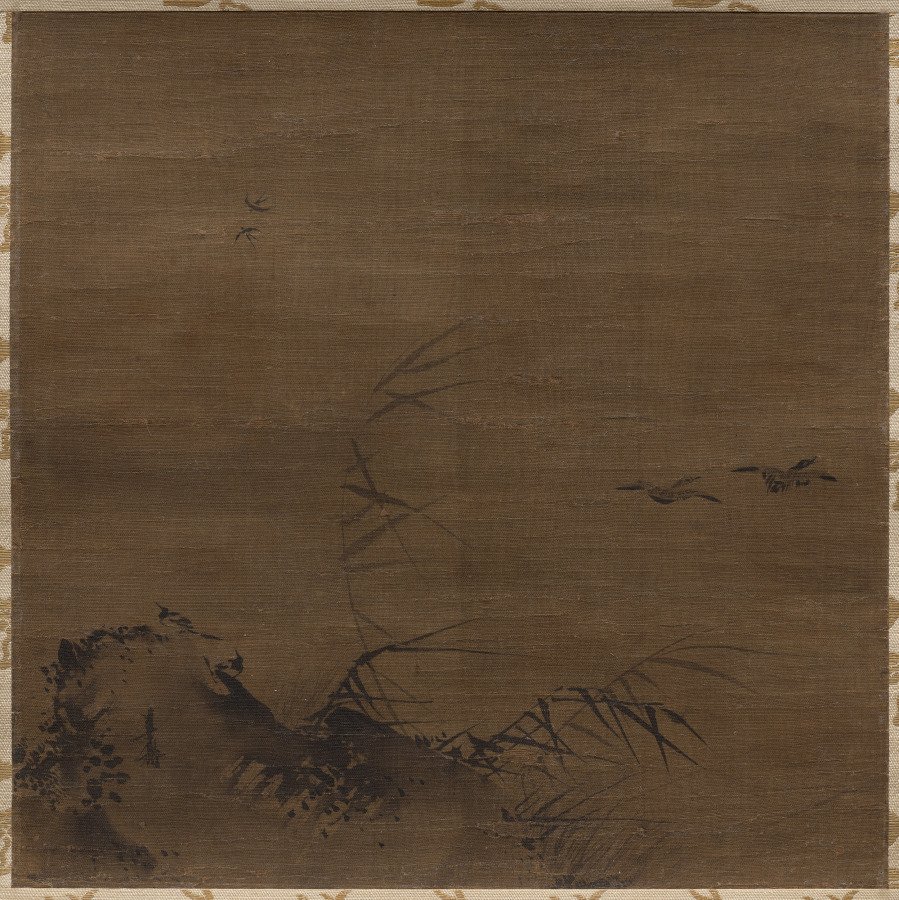
This album leaf now mounted as a hanging scroll is attributed to the 13th-century artist Liang Kai, who served for a time in the Southern Song court as a court painter. In recognition of Liang’s outstanding talent, Emperor Ningzong (reigned 1195–1224) granted him the “Gold Belt,” the highest honor reserved for court painters. The artist, however, left his prestigious position in pursuit of the simple life in Buddhist monasteries. <br><br>The so-called one-corner composition (leaving empty space on one side as the artist did here) was popular in both the imperial court and Buddhist monasteries. This distinctive composition allowed the artist to render a sense of space. Liang Kai’s abbreviated style and expressive monochromatic brushwork were often understood to embody ideals of Chan (Zen) Buddhism, and were continued by later Buddhist painters.
0 observed sales · 0 comparable sales · 3 structured provenance events · 3 structured exhibitions.