Comparable Sales
Same-artist public sales ranked by medium, creation year, dimensions and sale recency.
No public-rights comparable sales meet the current evidence criteria. RELICT does not fill the table with research-only or licensed-only facts.
Observed sale facts, comparable evidence, artist index history and modeled research remain separate.
Same-artist public sales ranked by medium, creation year, dimensions and sale recency.
Year in Review, 1976. The Cleveland Museum of Art, Cleveland, OH (organizer) (February 1-March 6, 1977). Japanese Screens from the Museum and Cleveland Collections. The Cleveland Museum of Art, Cleveland, OH (organizer) (March 23-May 8, 1977). Byobu: The Art of the Japanese Screen. The Cleveland Museum of Art (organizer) (August 1-October 14, 1984). Suibokuga: Japanese Ink Painting. The Cleveland Museum of Art, Cleveland, OH (organizer) (October 1, 1985-February 24, 1986). Asian Autumn: Splendid Variety: 18th-Century Art in Japan. The Cleveland Museum of Art, Cleveland, OH (organizer) (November 16, 1993-March 6, 1994). The Lure of Painted Poetry: Japanese and Korean Art. The Cleveland Museum of Art, Cleveland, OH (organizer) (April 15-August 21, 2011).
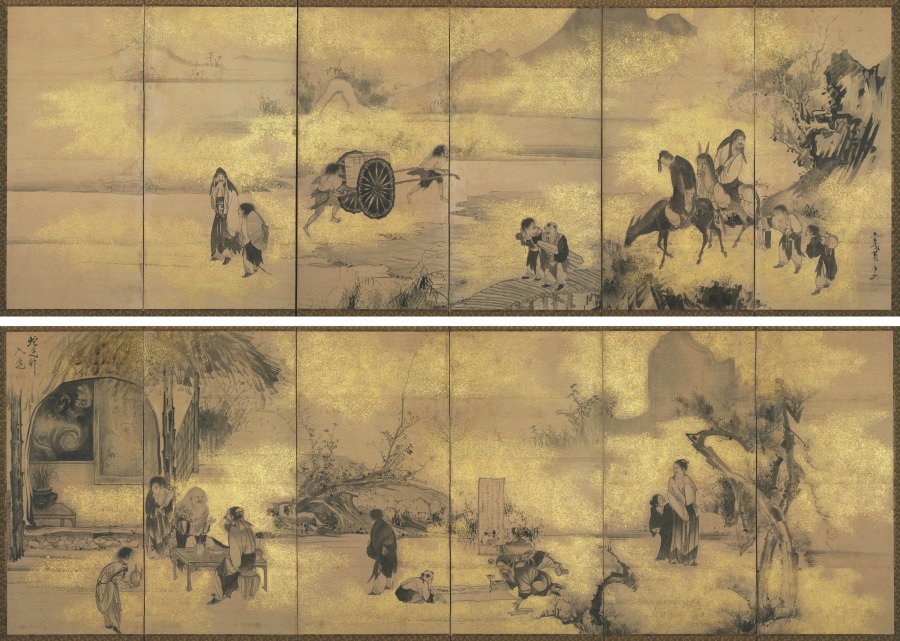
Responding to the desires of the middle class (<em>chonin</em>), some late Edo period Japanese painters moved away from the seriousness associated with the Chinese theme of reclusion, focusing instead on the motif’s humorous aspects. The theme Eight Immortals of the Wine Cup is based on a poem by the renowned 8th-century Chinese poet Du Fu about his eight colleagues. These scholars eagerly sought release from their official governmental duties and then supposedly fled the capital for the countryside. There, they engaged in wildly eccentric behavior and adventurous creative work, all fueled by copious amounts of wine. Shohaku’s version of events exaggerates the scholars’ pleasure, as seen in their comical facial expressions.
0 observed sales · 0 comparable sales · 0 structured provenance events · 6 structured exhibitions.