Comparable Sales
Same-artist public sales ranked by medium, creation year, dimensions and sale recency.
No public-rights comparable sales meet the current evidence criteria. RELICT does not fill the table with research-only or licensed-only facts.
Observed sale facts, comparable evidence, artist index history and modeled research remain separate.
Same-artist public sales ranked by medium, creation year, dimensions and sale recency.
M. Chaff, Paris (as Mantegna)
Baron Michele Lazzaroni, Paris (1863–1934)
John E. Fairfax Murray, Florence (1849–1919)
M. Knoedler & Co., New York City
James Parmelee, Washington D.C. (1855–1931)
By bequest to The Cleveland Museum of Art
M. Chaff, Paris (as Mantegna) Baron Michele Lazzaroni, Paris (1863–1934) John E. Fairfax Murray, Florence (1849–1919) M. Knoedler & Co., New York City James Parmelee, Washington D.C. (1855–1931) By bequest to The Cleveland Museum of Art
Art and Humanism in the Renaissance. The Cleveland Museum of Art, Cleveland, OH (organizer) (January 23-February 25, 1962).
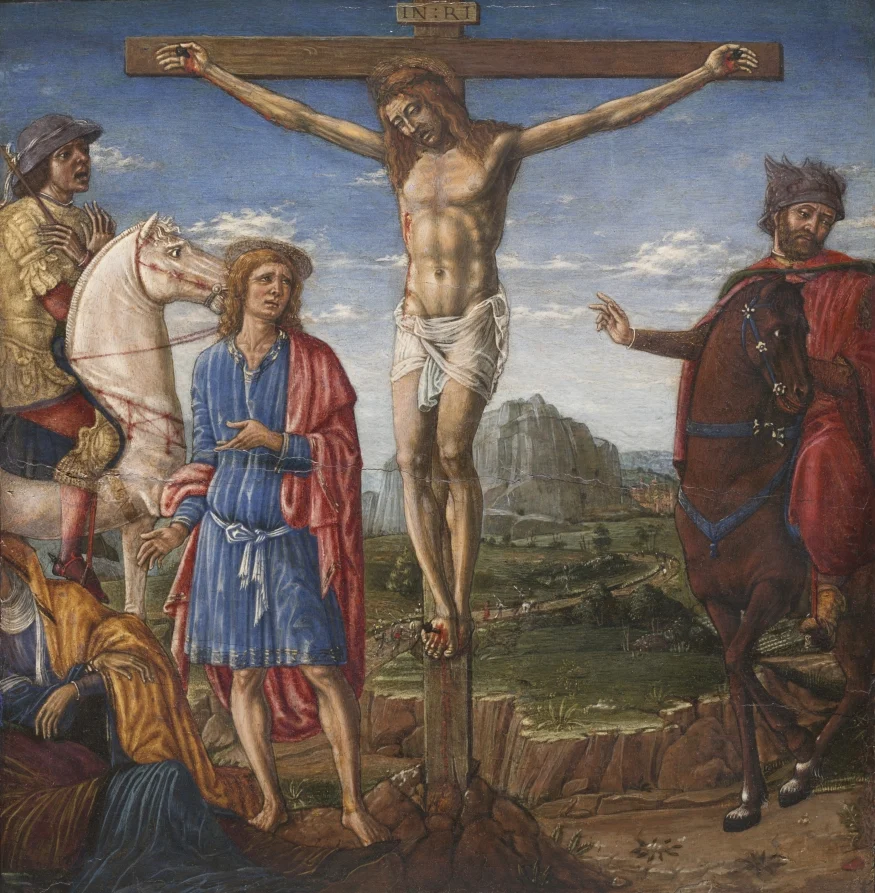
This small picture belonged to a predella, a series of subsidiary panels consisting of narrative scenes and situated at the bottom of an altarpiece. Predella paintings are significant because the artist was allowed more freedom and inventiveness here than in the higher part of the altarpiece. In this Crucifixion scene, the harmony of colors, the monumentality of the figures, and the symmetry of the composition all reflect the classical spirit of Renaissance Italy. Moreover, the panel shows some characteristics of the traditional Sienese school—such as the quality and elegance of the lines—which persists in Giovanni’s works.
0 observed sales · 0 comparable sales · 6 structured provenance events · 1 structured exhibitions.