Comparable Sales
Same-artist public sales ranked by medium, creation year, dimensions and sale recency.
No public-rights comparable sales meet the current evidence criteria. RELICT does not fill the table with research-only or licensed-only facts.

Observed sale facts, comparable evidence, artist index history and modeled research remain separate.
Same-artist public sales ranked by medium, creation year, dimensions and sale recency.
$4b
[]
$4b
$4b
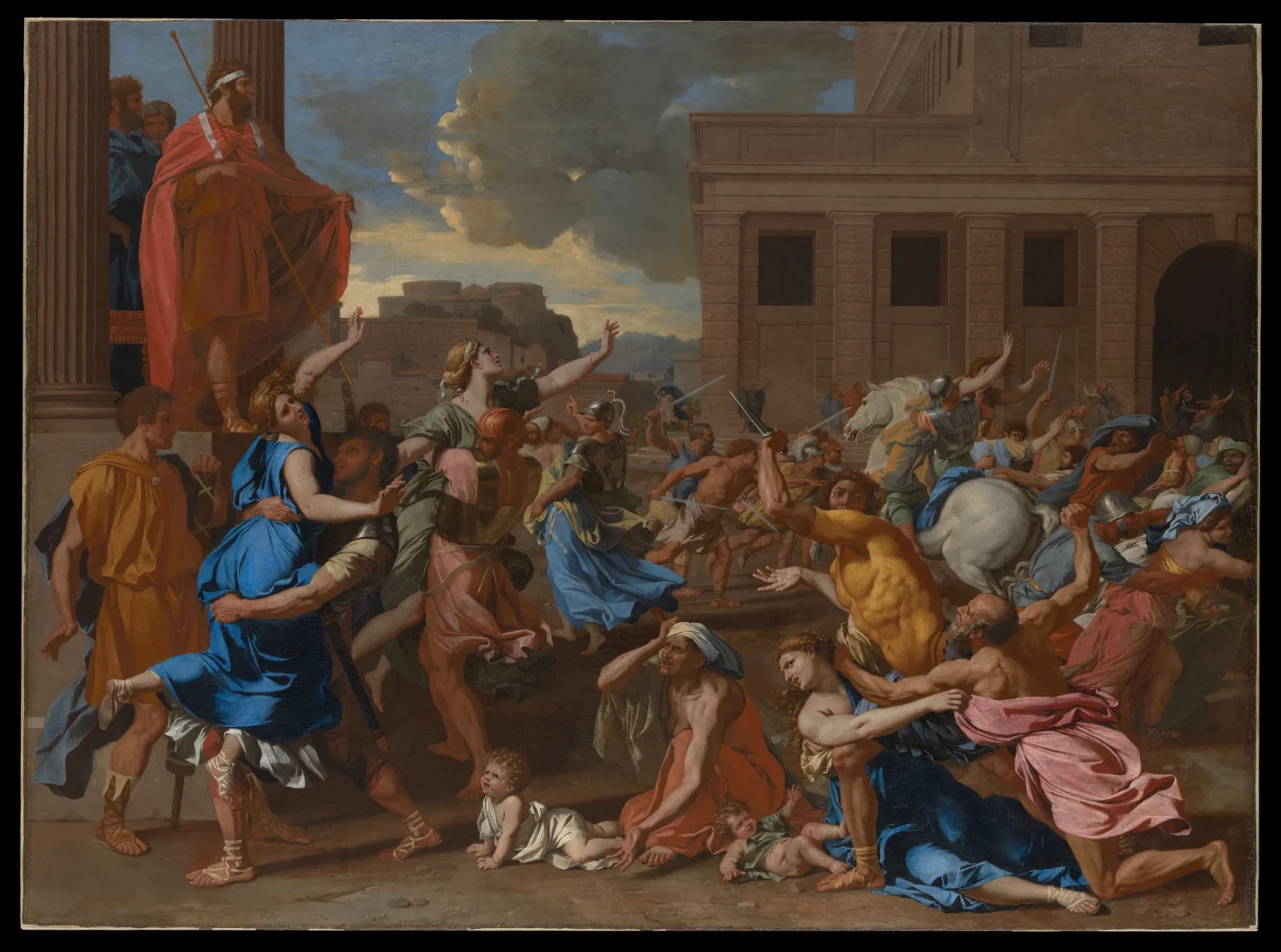
This painting embodies Poussin’s innovations derived from studying Roman antiquity. Figural groups, several closely based on ancient sculptures, evoke the choreography of dancers caught mid-action on stage, while the complex interplay of drapery woven between the figures reveals Poussin as a master colorist. Poussin arranged wax figures in a tiny, theater-like box to establish the sophisticated spatial relationships and formal balance of such paintings. The violent subject comes from a founding myth for the city of Rome: Romans invited the neighboring Sabines to a festival with the intention of forcibly capturing their women as wives. When the Roman leader Romulus raised his cloak—seen here at left—his warriors seized them. This painting belonged to the French ambassador to Rome in the 1630s and then to King Louis XIII’s chief minister, Cardinal Richelieu.
2 observed sales · 0 comparable sales · 2 structured provenance events · 0 structured exhibitions.