Comparable Sales
Same-artist public sales ranked by medium, creation year, dimensions and sale recency.
No public-rights comparable sales meet the current evidence criteria. RELICT does not fill the table with research-only or licensed-only facts.
Observed sale facts, comparable evidence, artist index history and modeled research remain separate.
Same-artist public sales ranked by medium, creation year, dimensions and sale recency.
Mrs. Oppenheim (probably Marie Oppenheim, the sister of the artist). Sold with several other Lehmann...
Mrs. Oppenheim (probably Marie Oppenheim, the sister of the artist). Sold with several other Lehmann portraits at San Francisco sale, Butterfield & Butterfield, 9 December 1975 (lot 853), Portrait of a XIXTh Century Gentleman. Schweitzer Gallery, New York, 1976 (stock number 7944). Bought by Noah L. Butkin, Cleveland. Bequeathed to the CMA in 1980.
Year in Review: 1980. The Cleveland Museum of Art (organizer) (June 24-July 19, 1981).
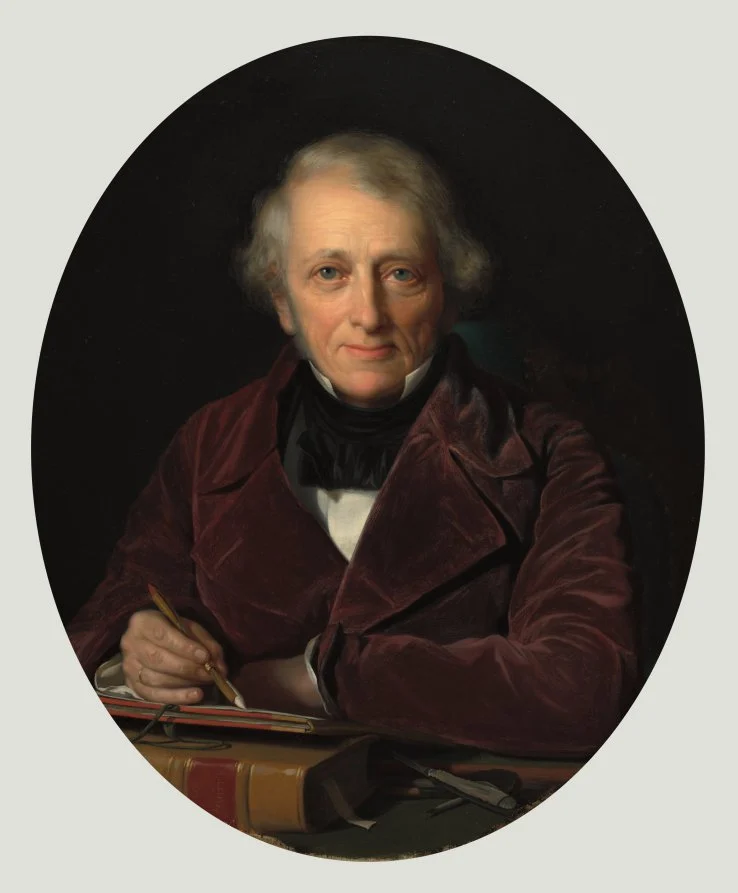
This portrait portrays the artist's father, himself a painter and printmaker who gave his son his earliest artistic training. Fittingly, Lehmann depicted his father at work, surrounded by the tools of his trade. Resting his arms upon a sheet of paper supported by a book and a portfolio, Leo Lehmann holds a portecrayon, a penlike holder for the 19th-century equivalent of modern wax crayons. His intense gaze and his poised drawing implement suggest that he may be recording the likeness of his son, who at the same time paints his father's portrait. Lehmann was a successful portrait painter, especially among the English aristocracy, during the latter half of the 19th century. His popularity resulted not only from his remarkable ability to reproduce the appearance of surfaces—like his father's velvet coat—but also his capacity to capture the psychological presence of his sitters.
0 observed sales · 0 comparable sales · 1 structured provenance events · 1 structured exhibitions.