Comparable Sales
Same-artist public sales ranked by medium, creation year, dimensions and sale recency.
No public-rights comparable sales meet the current evidence criteria. RELICT does not fill the table with research-only or licensed-only facts.
Observed sale facts, comparable evidence, artist index history and modeled research remain separate.
Same-artist public sales ranked by medium, creation year, dimensions and sale recency.
(Andreas Leisinger, Tokyo, Japan, sold to the Cleveland Museum of Art)
The Cleveland Museum of Art, Cleveland, OH
(Andreas Leisinger, Tokyo, Japan, sold to the Cleveland Museum of Art) The Cleveland Museum of Art, Cleveland, OH
Julie Mehretu: Portals. The Cleveland Museum of Art, Cleveland, OH (organizer) (July 16-November 13, 2022). Main Asian Rotation (Gallery 236). The Cleveland Museum of Art, Cleveland, OH (July 21, 2014-January 13, 2015).
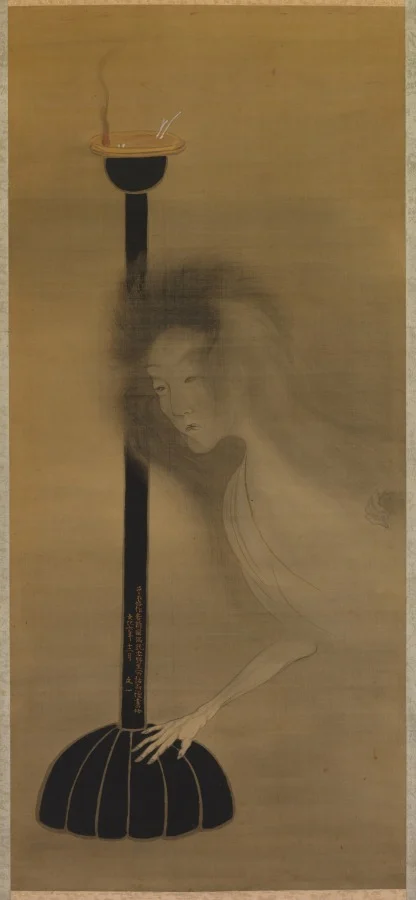
Tani Bun’ichi was the adopted son of Tani Buncho (1763-1840), a master painter and connoisseur. A Bun’ichi painting remarkably similar to this one that depicts a ghost by a lacquer lamp stand, is in the collection the Tokyo temple Zensho-an. That painting once belonged to Sanyutei Encho (1839-1900), a famed raconteur of ghost stories who donated his collection of ghost paintings to the temple. An inscription in gold on the lamp stand in this painting, identical in content to that on the Zensho-an painting, indicates that it was executed in the 12th month of 1810. Bun’ichi explains that he did not like painting ghosts, but tried it out after listening to a person by the name of Ono.
0 observed sales · 0 comparable sales · 2 structured provenance events · 1 structured exhibitions.