Comparable Sales
Same-artist public sales ranked by medium, creation year, dimensions and sale recency.
No public-rights comparable sales meet the current evidence criteria. RELICT does not fill the table with research-only or licensed-only facts.
Observed sale facts, comparable evidence, artist index history and modeled research remain separate.
Same-artist public sales ranked by medium, creation year, dimensions and sale recency.
(Katsuhiro Kobayashi, Tokyo, Japan, sold to the Cleveland Museum of Art)
The Cleveland Museum of Art, Cleveland, OH
(Katsuhiro Kobayashi, Tokyo, Japan, sold to the Cleveland Museum of Art) The Cleveland Museum of Art, Cleveland, OH
Year in Review: 1980. The Cleveland Museum of Art (organizer) (June 24-July 19, 1981). The Lure of Painted Poetry: Japanese and Korean Art. The Cleveland Museum of Art, Cleveland, OH (organizer) (April 15-August 21, 2011). To the River's South in Japanese Painting. The Cleveland Museum of Art, Cleveland, OH (organizer) (December 15, 2023-June 2, 2024).
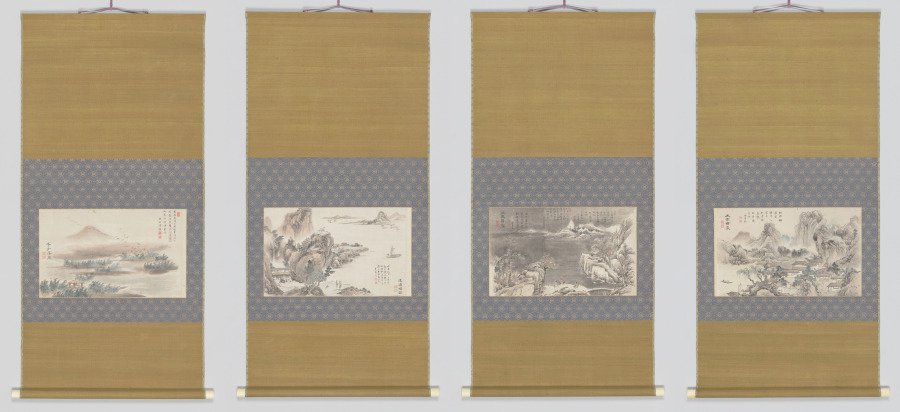
These paintings were part of a set of album leaves representing the Eight Views of Xiao-Xiang, a theme originating in Chinese poetry and painting that spread to both Korea and Japan. Southern China’s Xiao-Xiang area, where the mist-covered banks of the Xiang River created a complex landscape shifting like the moods and minds of people, captured the imaginations of generations of painters and calligraphers. Inscriptions on these works suggest that they were possibly ordered by newly prominent Japanese Confucian scholars.
0 observed sales · 0 comparable sales · 2 structured provenance events · 3 structured exhibitions.