Comparable Sales
Same-artist public sales ranked by medium, creation year, dimensions and sale recency.
No public-rights comparable sales meet the current evidence criteria. RELICT does not fill the table with research-only or licensed-only facts.
Observed sale facts, comparable evidence, artist index history and modeled research remain separate.
Same-artist public sales ranked by medium, creation year, dimensions and sale recency.
(Sander L. Feldman, Washington, DC, sold to the Cleveland Museum of Art)
The Cleveland Museum of Art, Cleveland, OH
(Sander L. Feldman, Washington, DC, sold to the Cleveland Museum of Art) The Cleveland Museum of Art, Cleveland, OH
Indian Gallery 242b Rotation – November 2016. The Cleveland Museum of Art (organizer) (November 7, 2016-April 10, 2017). Life and Exploits of Krishna in Indian Paintings. The Cleveland Museum of Art, Cleveland, OH (organizer) (September 1, 2021-February 6, 2022).

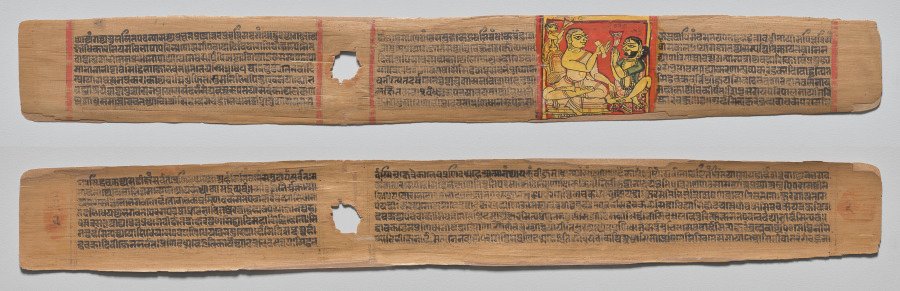
Unknown artist · 1427

Unknown artist · 1427

Unknown artist · 1427

Devachandra (Indian) · 1286
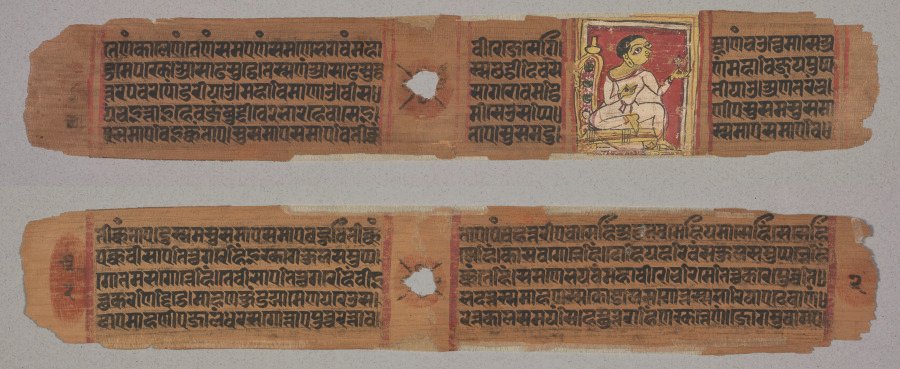
Unknown artist · 1286
The author of the text, Hemachandra (1088–1173) is seated at the left, on a throne. He was a Jain monk, here shown clad in a white robe, with shaven head, holding a cloth before his mouth to screen out any insects he might inadvertently harm by swallowing. Also an attribute of Jain ascetics, who adhere to principles of committing no harm to any living being, is the broom behind his back, used to sweep insects from the path. He wrote this text in 1160, illustrating points of grammar with praiseworthy deeds of his royal patrons, such as King Kumarapala (reigned 1143–1172) of the Solanki dynasty (940–1244) of western India who sits before him.
0 observed sales · 0 comparable sales · 2 structured provenance events · 2 structured exhibitions.