Comparable Sales
Same-artist public sales ranked by medium, creation year, dimensions and sale recency.
No public-rights comparable sales meet the current evidence criteria. RELICT does not fill the table with research-only or licensed-only facts.
Observed sale facts, comparable evidence, artist index history and modeled research remain separate.
Same-artist public sales ranked by medium, creation year, dimensions and sale recency.
The Year in Review for 1988. The Cleveland Museum of Art, Cleveland, OH (organizer) (March 1-May 14, 1989). Japanese Gallery 235 Rotation - July 2017-January 2018. The Cleveland Museum of Art (organizer) (July 15, 2017-January 2, 2018).
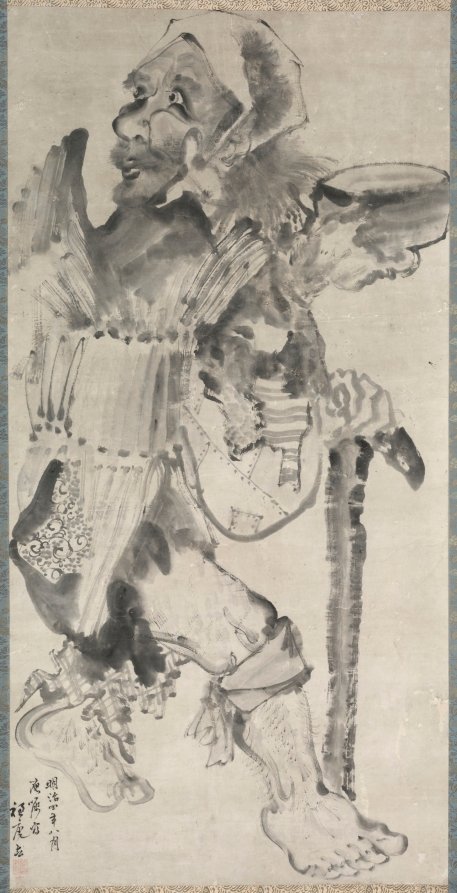
The Japanese term for beggar, kojiki, derives from the word kotsujiki, which refers to Buddhist monks taking bowls from door to door to request sustenance. The son of the artist Suian Bunrō, Suian Hirafuku was born in Kakunodate in Japan’s northern Akita prefecture. When he was 16, he went to study in Kyoto. In 1880 he took first place with another painting titled Beggar at the third Akita Prefectural Industrial Exposition, and in 1890, he took second prize for technical achievement with Nursing Tigress at the third National Industrial Exposition.
0 observed sales · 0 comparable sales · 0 structured provenance events · 2 structured exhibitions.