Comparable Sales
Same-artist public sales ranked by medium, creation year, dimensions and sale recency.
No public-rights comparable sales meet the current evidence criteria. RELICT does not fill the table with research-only or licensed-only facts.
Observed sale facts, comparable evidence, artist index history and modeled research remain separate.
Same-artist public sales ranked by medium, creation year, dimensions and sale recency.
Collection of the artist, Hamheung, North Korea, sold to the Kwak family
Kwak family collection, Korea, by descent to Paul Kwak
Paul Kwak, Akron, OH, sold to the Cleveland Museum of Art
The Cleveland Museum of Art, Cleveland, OH
Collection of the artist, Hamheung, North Korea, sold to the Kwak family Kwak family collection, Korea, by descent to Paul Kwak Paul Kwak, Akron, OH, sold to the Cleveland Museum of Art The Cleveland Museum of Art, Cleveland, OH
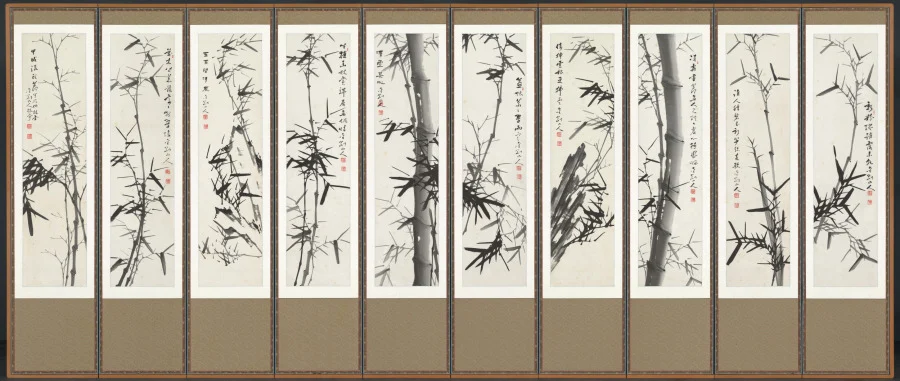
Ink, Paper, and Brush - Korean Gallery 236 Rotation. The Cleveland Museum of Art (organizer) (July 24, 2019-January 26, 2020).
Active during the Japanese colonial period in Korea (1910–45), the artist Jin-woo Kim earned his artistic reputation for his expressive renditions of bamboo swaying in a strong wind. His piercing bamboo shoots are often compared to an iron spear, and their sharp leaves to a knife. It is believed that he deliberately emphasized sharpness in his brushstrokes to express his strong resistance against Japanese colonial oppression.
0 observed sales · 0 comparable sales · 4 structured provenance events · 1 structured exhibitions.